Injected nanoparticles make blind mouse retinas respond to light
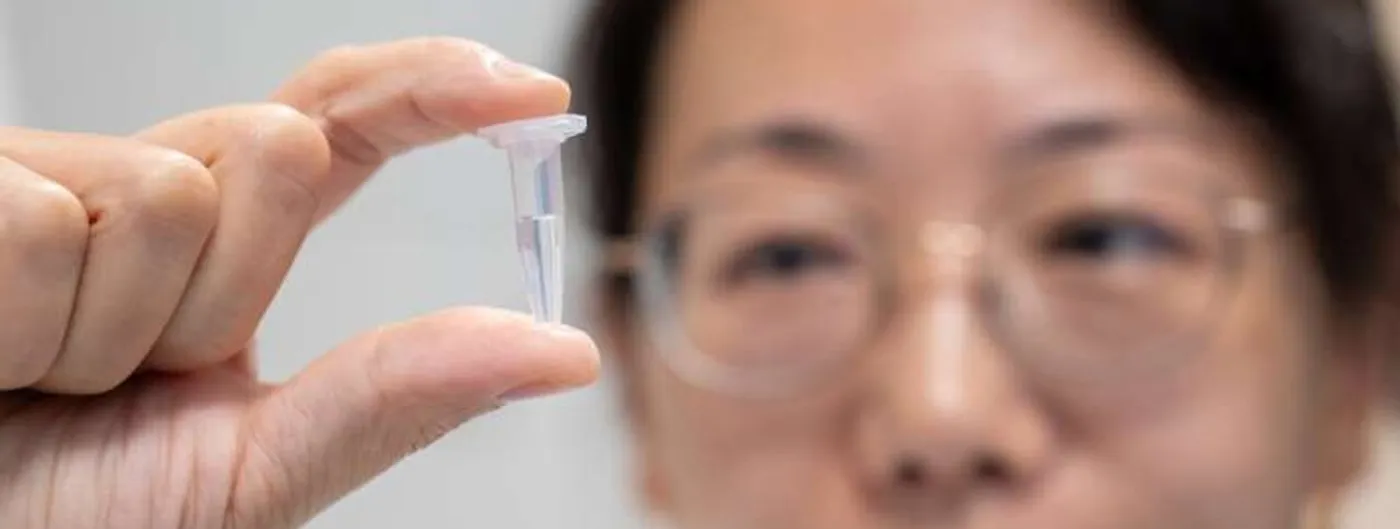
A team at Aarhus University led by Menglin Chen published in Nature Biomedical Engineering on 22 September 2026 an injectable light receptor for retinas that have lost their photoreceptors. The particles are hollow spheres of graphitic carbon nitride, a light-sensitive semiconductor, about 300 nanometres across, their shape modelled on plant chloroplasts.
Injected into the eye, the particles settle near the retinal ganglion cells, the neurons that survive when retinitis pigmentosa has destroyed the rods and cones. Light striking the particles activates those cells directly, without any genetic modification. Blind mice with advanced retinitis pigmentosa showed light-evoked activity in the visual cortex and behavioural responses to light; in isolated pig retina, ganglion cells fired under LED illumination only when the particles were present.
The group states that the experiments do not show a return of normal vision. What they show is a new detection pathway built from materials rather than genes or electrodes. Delivery, long-term behaviour in the eye and deeper safety work come before any human trial, under the project the team calls RetiNano, which aims at an injectable photovoltaic retinal prosthesis.