A daily pill slowed retinal atrophy in Stargardt disease
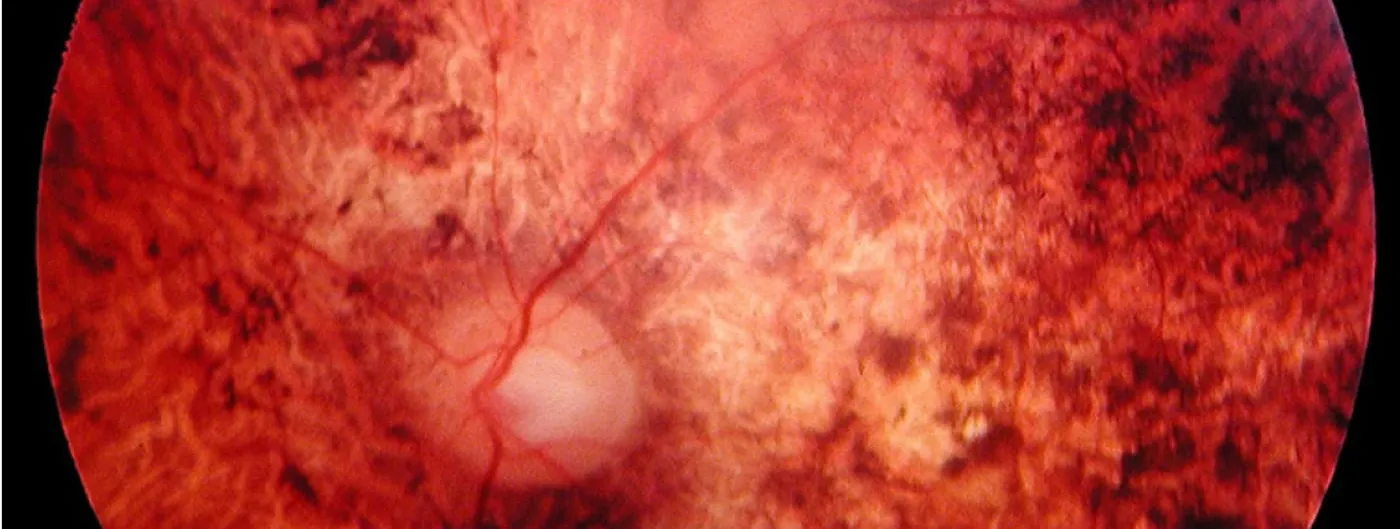
Christian P. Hamel, Orphanet Journal of Rare Diseases 2007 (CC BY 2.0), via Wikimedia CommonsCC BY

Stargardt disease is an inherited retinal degeneration caused by mutations in ABCA4. It begins in childhood or early adulthood, eats outward from the centre of vision, and has no approved treatment. Alkeus Pharmaceuticals announced on 3 September 2026 that JAMA Ophthalmology had published efficacy and safety results from TEASE-1, a randomised, double-masked, placebo-controlled trial of gildeuretinol acetate, a pill taken once a day.
Fifty patients aged 18 to 60 were followed for 24 months. On the primary endpoint, the square-root-transformed growth rate of retinal atrophic lesions fell 21.6 per cent — 0.182 mm per year on the drug against 0.232 mm per year on placebo, p<0.001. Measured without the transformation, lesion area grew 0.867 mm² per year on treatment against 1.230 mm² per year on placebo, a 29.3 per cent reduction.
The drug already holds Breakthrough Therapy, Fast Track, Rare Pediatric Disease and Orphan Drug designations from the FDA, and orphan designations from the EMA and Japan’s MHLW. A Phase 3 trial, NORTHSTAR, is enrolling.
What the trial measured is the rate at which the retina is destroyed, not sight regained. Slowing atrophy in fifty people over two years is a delay, and it is the first one this disease has had.