Alzheon publishes ALZ-801 biomarker results in APOE4 carriers
Alzheon, Inc. / pipeline pagePress kit
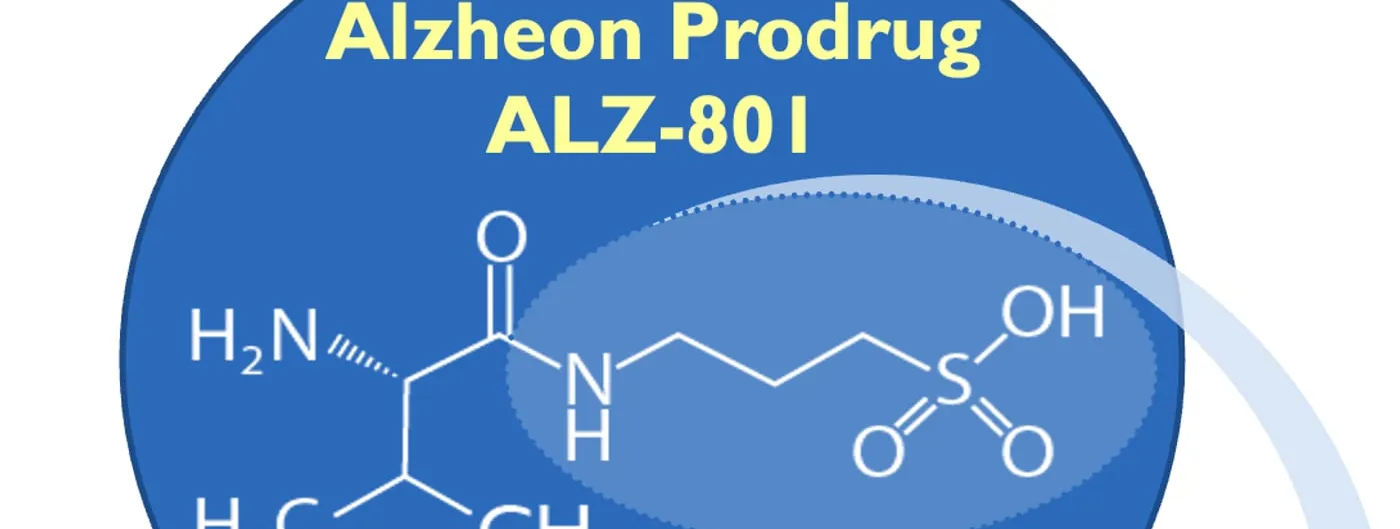
Alzheon announced on 8 September 2026 that the journal Drugs had published the plasma-biomarker analysis of its APOLLOE4 Phase 3 and Phase 2 trials of oral valiltramiprosate, also called ALZ-801. The trials enrolled people carrying two copies of the APOE4 allele — roughly 15% of Alzheimer’s patients, and the group at highest genetic risk.
In the mild-cognitive-impairment subgroup of the 78-week Phase 3, plasma p-tau217 was lower on the drug than on placebo at weeks 26, 52 and 78, each at p below 0.025. Neurofilament light, a marker of dying neurons, was lower at week 78 (p = 0.032). The drops in p-tau217 correlated with less hippocampal shrinkage on MRI (r = −0.353, p = 0.013), with ADAS-Cog13 scores (r = 0.276, p = 0.039) and with CDR-SB decline (r = 0.377, p = 0.005).
These are correlations inside a trial, not a new efficacy readout, and the release does not restate whether APOLLOE4 met its primary endpoint. What the paper argues is mechanistic: that an oral small molecule, taken twice daily, moves the blood markers of the disease in the direction the imaging and the cognitive scales also move. Alzheon says it is planning a further Phase 3 study in APOE4 carriers.
Sources
- [1]Alzheon Announces Peer-Reviewed Publication Showing Oral Valiltramiprosate/ALZ-801 Achieves Sustained Plasma Biomarker Reductions Linked to Better Cognitive, Functional, and Brain Atrophy Outcomes in APOE4 Carriers with Early Alzheimer's Disease
- [2]Alzheon reports Phase 3 win with an Alzheimer's treatment targeted at high-risk genetic carriers