Claude agents find a CRISPR-like enzyme system in phage DNA
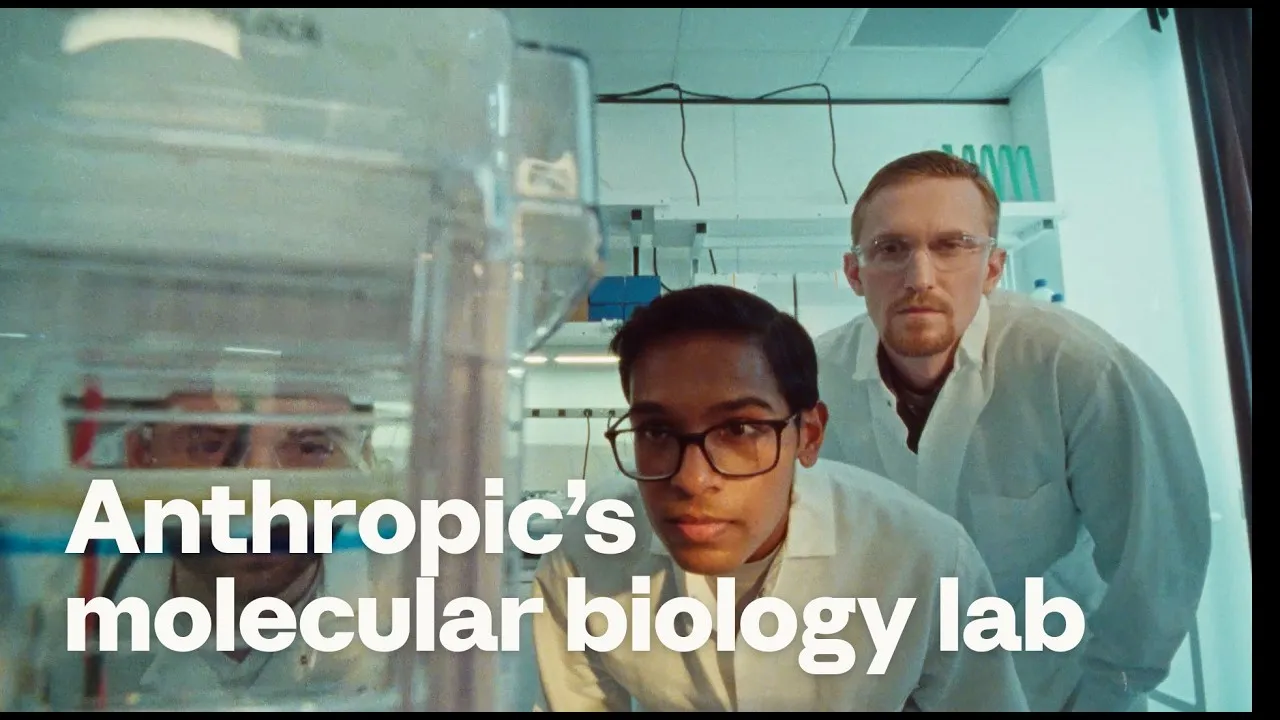
▶ Anthropic — YouTubeVideo frame
Anthropic disclosed on 23 September 2026 that it runs a molecular biology laboratory in the Bay Area, working at biosafety levels 1 and 2, and published the lab’s first result: an enzyme system in bacteriophage DNA that had not been described before.
The search was computational. About 950 Claude agents ran for 21 hours and used roughly 210 million tokens. They gathered more than 200,000 reverse transcriptases, flagged 3,500 new candidate systems and narrowed them to 20 for detailed analysis. One pairs a reverse transcriptase with a partner gene and a long array of evenly spaced DNA repeats, an arrangement Anthropic calls array-associated reverse transcriptase, or ART. The repeats resemble CRISPR arrays, and the few known systems with comparable features can cut, copy and paste DNA.
The lab team then expressed the proteins in laboratory strains and found that the array is transcribed into a set of short RNAs. Anthropic states that it does not yet know what ART does, and the finding is presented in a company report rather than a peer-reviewed paper. People performed the bench work. Dario Amodei, Anthropic’s chief executive, said Claude may eventually run lab equipment autonomously with safeguards, but that it does not do so today.