A phone attachment screened 1,093 rural eyes for cataract
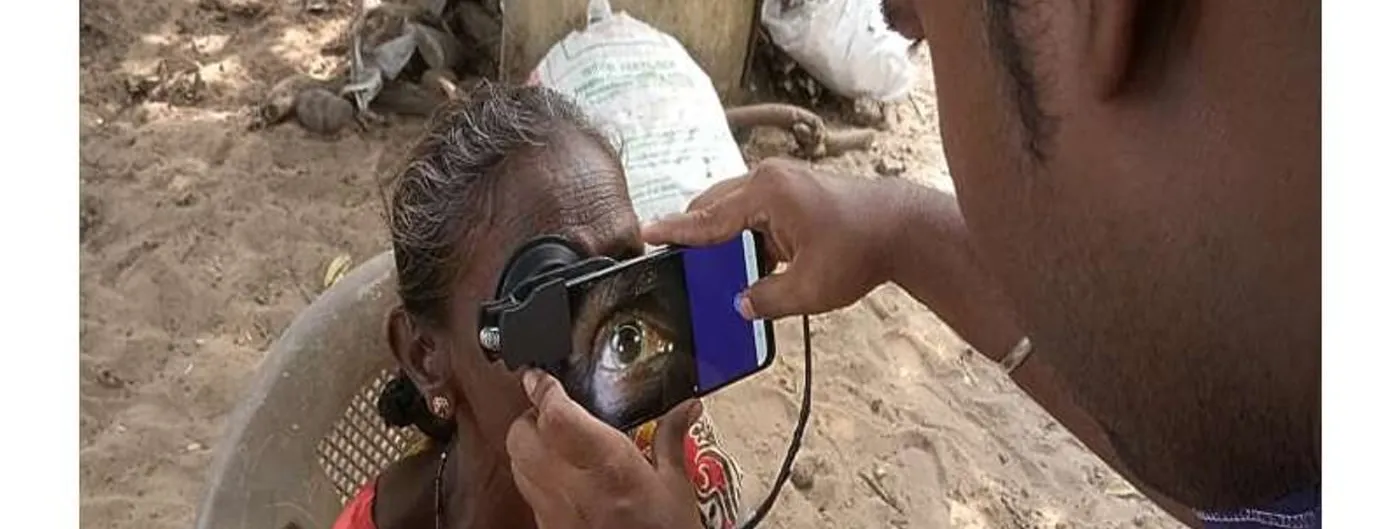
Aravind Eye Care System and Johns Hopkins University screened 1,093 patients across 19 rural eye camps in five towns of Tamil Nadu — Chengam, Tiruvannamalai, Cheyyar, Arani and Cuddalore — using an attachment that turns an Android phone into an anterior-segment camera. The results were presented on 13 September 2026 at the 44th congress of the European Society of Cataract and Refractive Surgeons.
The hardware is deliberately cheap: a magnifying lens, two white LEDs drawing power from the phone, and a silicone scope that rests against the eye socket to shut out ambient light. The whole system, phone included, costs under £150 and is manufactured in India. Community health workers were trained for three hours, photographed patients in under two and a half minutes per eye, and sent the images to an ophthalmologist reading remotely.
Against the in-person examination at the same camps, referral decisions agreed 96% of the time. Cataract classification agreed 89% overall — 96% for mature cataracts, 85% for immature ones — with 97% for pseudophakia and 94% for pterygium. ESCRS president Burkhard Dick called it a promising approach for under-served regions. The work was presented at a congress; no peer-reviewed publication has followed yet.