Aspen's Parkinson's cell therapy takes an RMAT designation
Aspen Neuroscience / pipeline pagePress kit
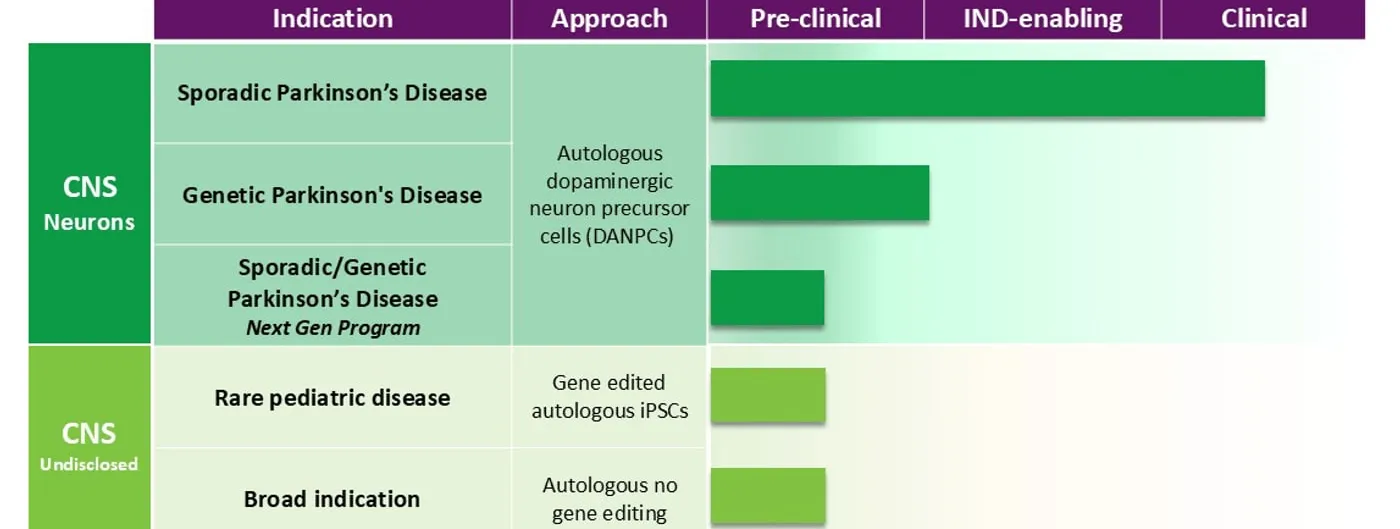
The FDA granted regenerative medicine advanced therapy designation to sasineprocel, the San Diego company Aspen Neuroscience said on 30 July 2026. The therapy, coded ANPD001, takes a patient’s own cells, reprograms them into dopaminergic neuron precursor cells, and delivers them surgically into the putamen — the part of the brain that loses dopamine signalling in Parkinson’s disease. Because the cells are the patient’s own, the approach is meant to avoid the immunosuppression that donor-derived grafts require.
The designation rests on early safety and activity data from ASPIRO, an open-label, multicohort, multicentre Phase 1/2a study that is still running. Aspen already held a Fast Track designation for the programme. RMAT is a procedural status, not a finding of efficacy: it buys earlier and more frequent contact with the agency and access to the same expedited machinery as breakthrough therapy. Chief executive Damien McDevitt called it a milestone for a potentially disease-modifying treatment.
Parkinson’s is treated today by replacing the chemical the dead neurons no longer make. A cell therapy proposes replacing the neurons. Whether the graft survives, wires in, and holds up over years is what the trial has yet to answer — the designation only says the regulator has agreed to watch more closely while it does.