Twelve aging rate indicators proposed to speed anti-aging trials
Austad, Kaeberlein and Miller, Frontiers in Science 2026 (CC BY 4.0)CC BY
Steven Austad of the University of Alabama at Birmingham, with Matt Kaeberlein and Richard Miller of the University of Michigan, published a lead article in Frontiers in Science on 17 September 2026 proposing a shortcut for testing anti-aging drugs.
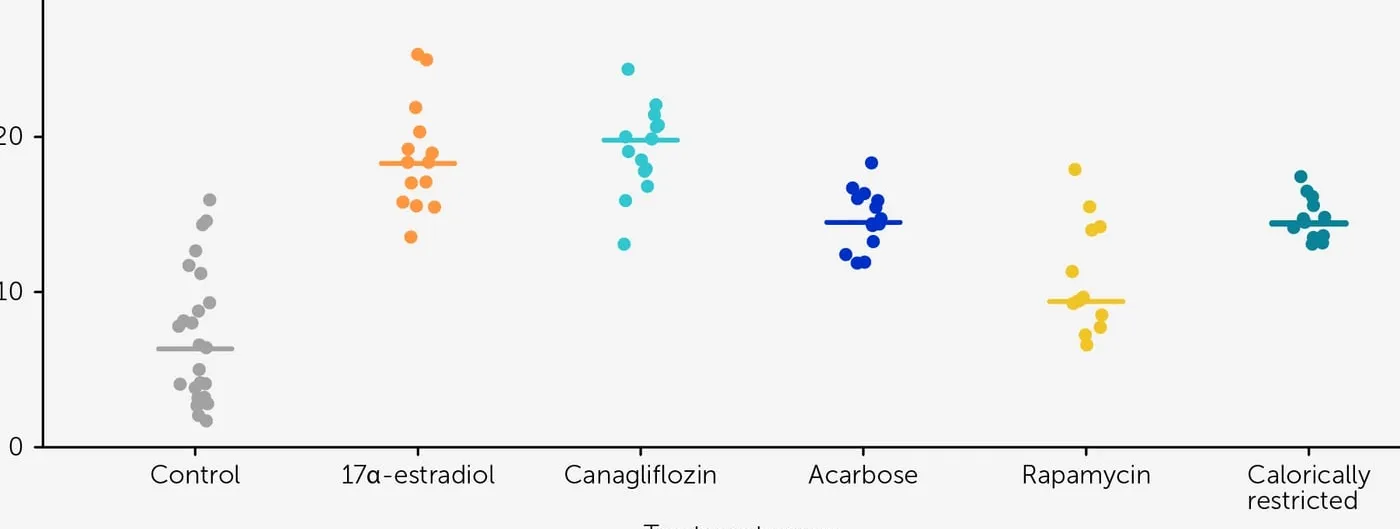
The problem they address is arithmetic. Establishing that a compound extends lifespan in mice takes three to four years, which caps how many compounds anyone can try. The authors draw on the National Institute on Aging Interventions Testing Program, which has identified fourteen agents that extend mouse lifespan by 12% or more, rapamycin among them at 23 to 26%.
Across those interventions, whether drugs, caloric restriction or single-gene mutations, many of the same molecular and physiological changes recur. From that overlap the authors name twelve candidate aging rate indicators, among them uncoupling protein levels in fat tissue and shifts in inflammatory markers. A conventional aging biomarker needs measurements at two points in time; an indicator of this kind is meant to be read from one.
The paper is a proposal, not a result. It sets out a research roadmap through machine learning, non-human primate work and companion-dog trials, and raises regulatory and equity questions about anti-aging drugs.