A California bill barring employers from neural data advances
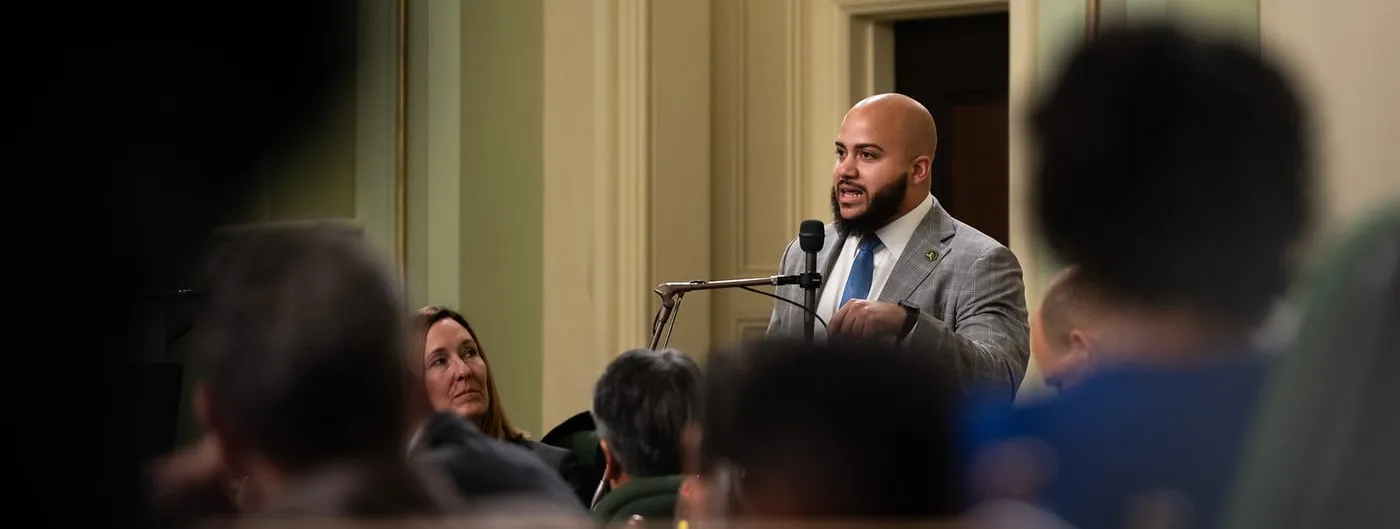
Miguel Gutierrez Jr., CalMattersPress kit
California’s AB 1883, authored by Assemblymember Isaac Bryan, cleared another step on 13 August 2026: the Senate committee that had parked it on its suspense file ten days earlier voted 5-2 to amend it and pass it, and the bill was read a second time and returned to second reading. It remains in the Senate.
The bill adds Part 5.8, sections 1580 through 1583, to the Labor Code. Its digest prohibits an employer from using a workplace surveillance tool for a list of purposes that includes collecting neural data, inferring an individual’s emotional state, and drawing conclusions from a worker’s gait. A separate provision bars artificial-intelligence surveillance tools from collecting neural data or recognising emotional state. Section 1580 defines neural data as information generated by measuring the activity of a worker’s central or peripheral nervous system, and not inferred from non-neural information — a definition that closes the obvious workaround of guessing at brain states from heart rate or keystrokes.
There is a safety exception, and it is narrowed: a tool used to ensure safety is permitted only if it does not use AI to infer neural data. Violations carry a civil penalty of up to $500 each, enforceable by the Labor Commissioner, a public prosecutor, or the worker.
One caveat the record carries: the posted bill text is the version amended on 2 July 2026. The 13 August amendments had not been published when this was written, so the text above is the last one a reader can open.