A sweat patch tracks cholesterol without drawing blood
CaltechPress kit
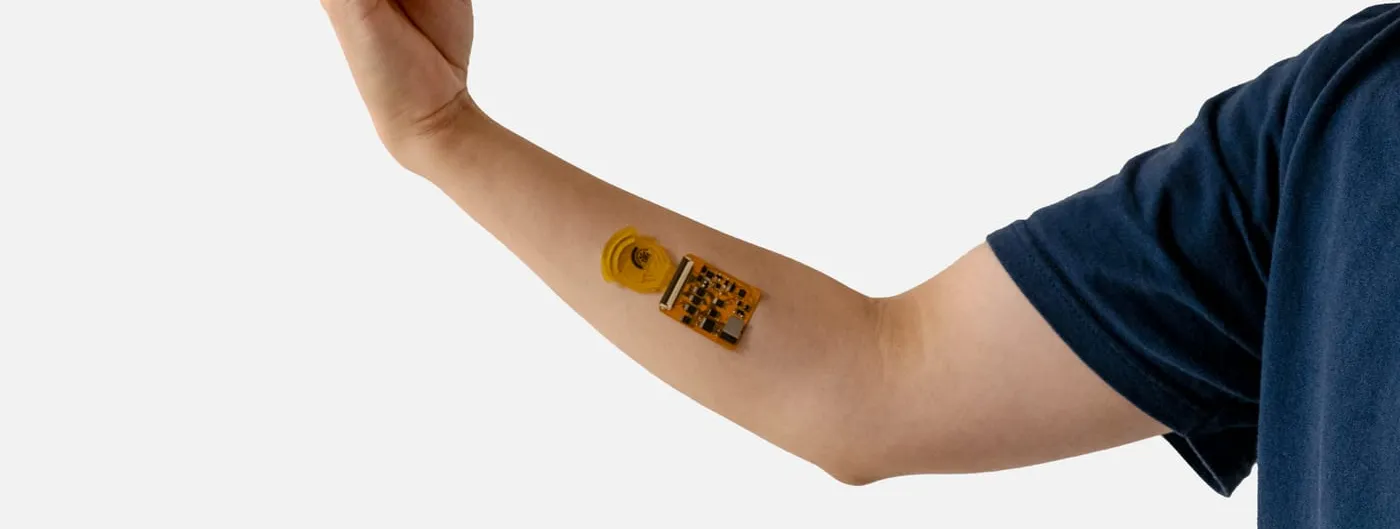
Caltech reported on 12 August 2026 that Wei Gao’s group in the Cherng Department of Medical Engineering has built an inexpensive adhesive patch that measures cholesterol and triglycerides from sweat, and infers blood lipid levels from them. The work appears in Nature Sensors as “Non-invasive continuous lipid profiling via cofactor-refreshing cascading enzymatic reactions and causal machine learning”, with graduate student José A. Lasalde-Ramírez, visitor Chihyeong Won and postdoctoral scholar Sijie Ji as lead authors.
Lipids do not lend themselves to the direct electrochemical read-out that glucose sensors use, so the patch runs a two-step enzymatic cascade whose cofactor is regenerated on the device rather than consumed. That regeneration is what gives the sensor its duration: the group reports sustaining the triglyceride measurement for more than 20 hours. Sweat lipid concentrations are not blood lipid concentrations, so a causal machine-learning model does the translation between the two. Testing covered 24 participants.
Cholesterol and triglycerides are today measured by a fasting blood draw at intervals of months or years. A wearable that reports them continuously is a different instrument answering a different question, and it has not yet been validated as a clinical one.