A server rack running on living human neurons switches on in Singapore
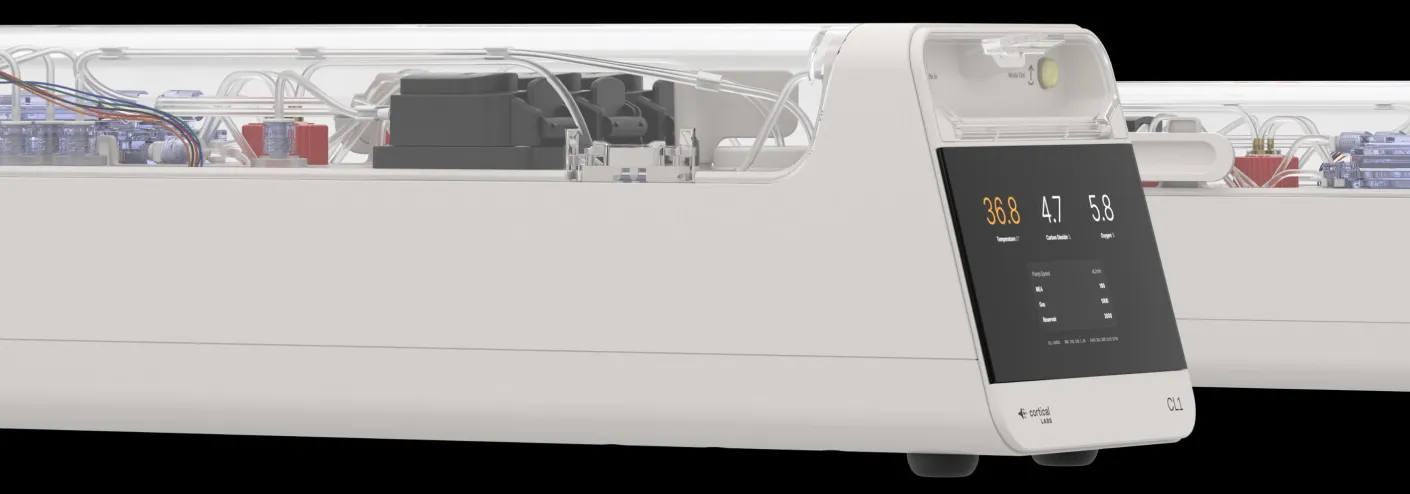
Cortical Labs / product pagePress kit
DayOne, Cortical Labs and the NUS Yong Loo Lin School of Medicine announced on 17 August 2026 that a 20-unit rack of CL1 biological computers is running at the NUS Life Sciences Institute in Singapore. Each CL1 grows human neurons derived from stem cells on a silicon chip fitted with electrodes, so the cells both receive stimulation and have their activity read back. The partners describe it as the first biologically integrated server rack operated independently of its manufacturer.
The number they lead with is power. Cortical Labs puts a single unit at roughly 25 watts and the full rack at 800 to 1,000 watts. A conventional rack draws several kilowatts and a dense AI rack can exceed a hundred. The prototype was shown to about 80 guests on 6 August before the public announcement.
The number nobody has published is what the rack computes. There is no benchmark, no workload comparison and no figure for output per watt, which is the ratio that decides whether low power is an advantage or simply a consequence of doing less. Neurons in these cultures also have a finite life measured in months, so an operating cost exists that silicon does not carry.