A chromatin protein keeps ancient viruses quiet in microglia
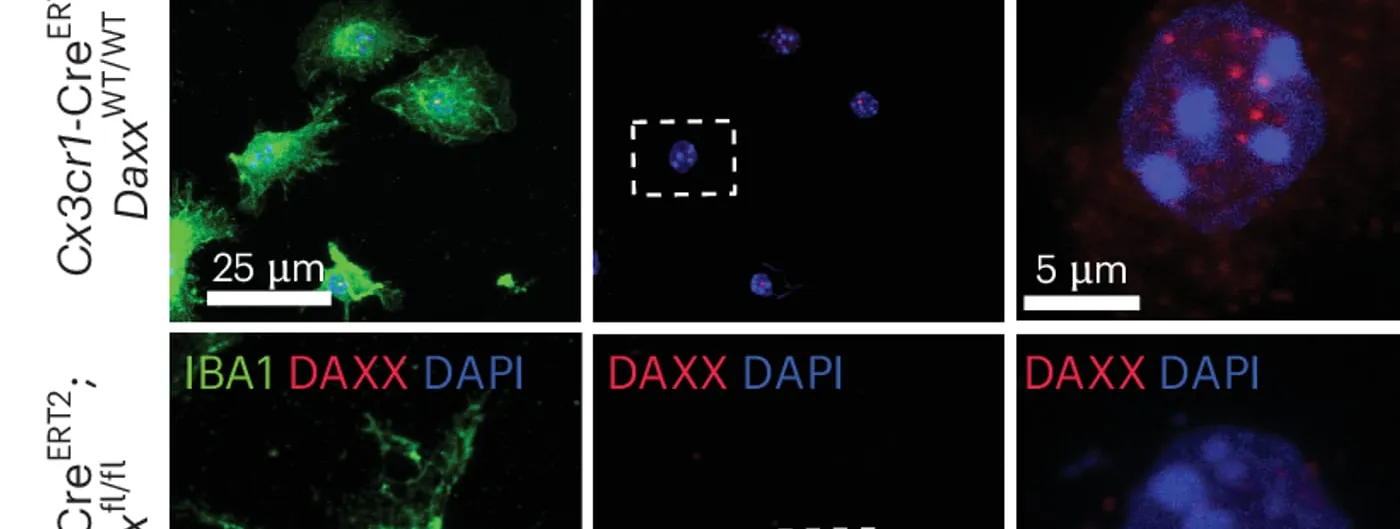
Around half the human genome is made of retrotransposable elements, much of it the wreckage of ancient viral infections. These sequences are not removed; they are kept silent, packed into chromatin too tightly to be read. Researchers at the German Center for Neurodegenerative Diseases and the University of Bonn reported on 15 September 2026, in Nature Neuroscience, what happens in the brain’s immune cells when that silencing slips.
The protein is DAXX, which helps hold chromatin compact. Its levels fall with age in microglia. As they fall, retrotransposable elements reactivate — and the team found the same inverse relationship in blood gene-expression data from more than 3,000 healthy people through the Rhineland Study, not only in mice.
To test whether the decline causes the damage rather than accompanying it, they deleted DAXX selectively from microglia in adult mice. Chromatin decompacted, the elements switched on, and the cells accumulated DNA damage, entered senescence, and produced inflammation. Losing DAXX alone was enough.
That makes chromatin maintenance a candidate lever on the low-grade neuroinflammation of aging. It is a mechanism established in mice and correlated in human blood, not a therapy: nothing here restores DAXX in a person, and no compound is named.