Embry-Riddle wins NIH grant for a self-adjusting hip exoskeleton
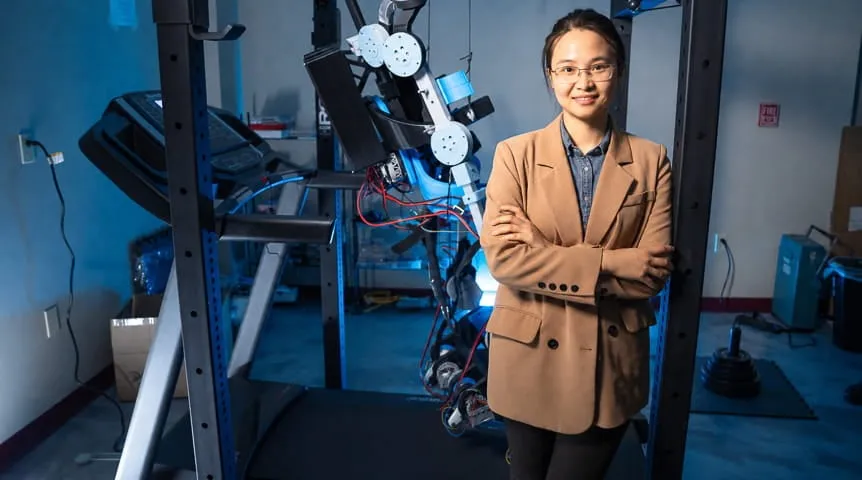
Embry-Riddle Aeronautical University / Bill Fredette-HuffmanPress kit
Embry-Riddle Aeronautical University announced on 28 September 2026 that a team led by Shuzhen Luo, assistant professor of mechanical engineering, has received a $523,000 grant from the US National Institutes of Health to develop a personalized hip exoskeleton for walking assistance.
The wearable robotic device is designed to adjust its support automatically. Motion sensors and an algorithm-based controller track the wearer’s gait and the terrain, so that, in Luo’s words, the wearer does not need to control the exoskeleton manually. The team plans to combine machine learning with 3D printing to shape each device to the wearer’s body dimensions and walking pattern, removing most of the fitting work that follows manufacture.
The project targets older adults and people with mobility limitations, with affordability as a stated goal. Collaborators include Yue Zhou of Embry-Riddle’s aerospace engineering department and orthopedic surgeon Ramakanth Yakkanti of the Rothman Orthopedic Institute at AdventHealth.
The announcement reports the award only: no prototype results or project timeline have been published.