Georgia Tech implants talk to each other through body tissue
Candler Hobbs / Georgia Tech College of EngineeringPress kit
Georgia Tech engineers published SWANS, the Smart Wireless Autonomous Networking System, in Science on 24 September 2026 (vol. 393, pp. 1322-1328, DOI 10.1126/science.adz5300). The system lets implanted sensors, implanted actuators and wearables exchange signals through the body’s own ionic conductivity instead of radio.
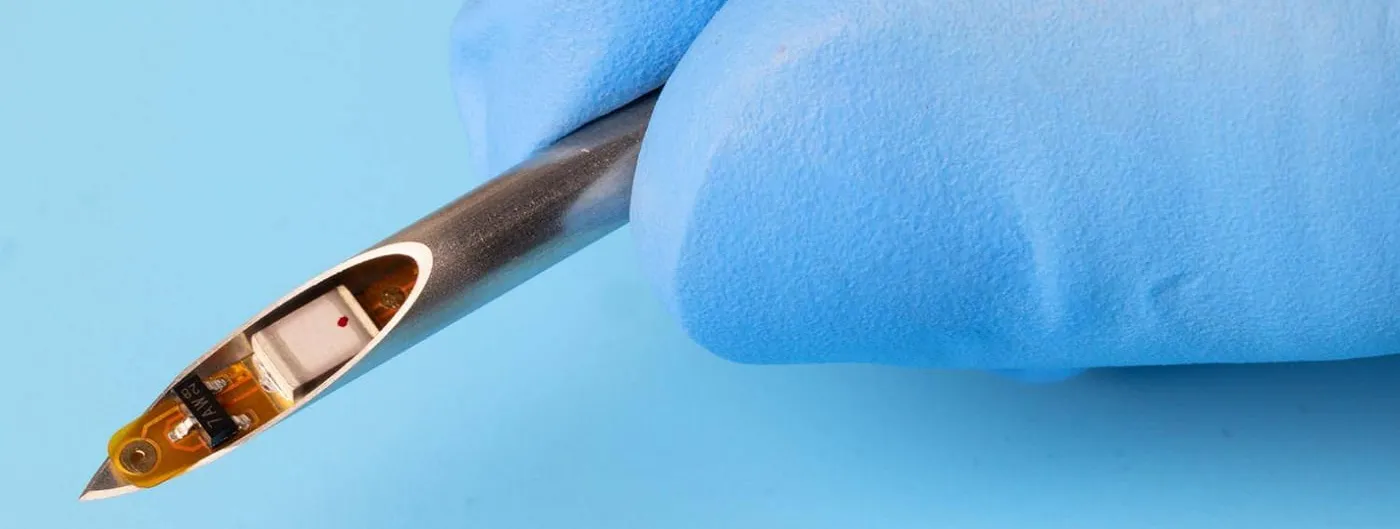
Radio links need antennas and power, which puts a floor under how small an implant can be. Signalling through tissue removes most of that cost. The team built implants smaller than 3 millimetres, small enough to go in through a syringe rather than surgery. They are made of passive components that draw almost nothing on standby. By the group’s estimate, an actuator triggered once a day would last about a year.
The demonstration was in rats. A sensor detected a movement of the front paw, and the network then triggered stimulation of a hind-leg muscle, coordinating the two limbs the way walking does. No human testing is reported.
The work was led by first author Ramy Ghanim and senior author Alex Abramson, with Georgia Tech and MIT collaborators. Abramson describes the goal as automated therapy: sensing in one part of the body and triggering a response elsewhere, such as releasing a drug or stimulating a nerve. The National Science Foundation and the National Institutes of Health funded the study.