Brain organoids kept for six years aged on a human schedule
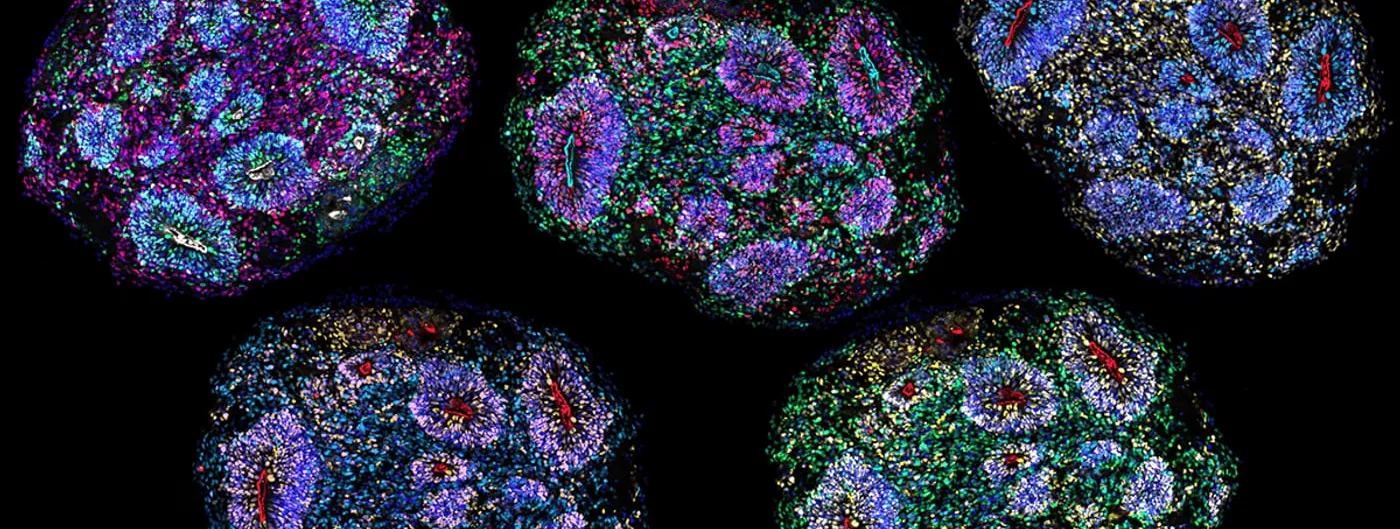
Irene Faravelli and Noelia Anton-Bolanos, via The TransmitterPress kit
A team led by Paola Arlotta at Harvard University kept human cortical organoids alive for close to six years and reported on 19 August 2026 in Nature (doi 10.1038/s41586-026-10877-x) that they matured on a human timetable rather than an accelerated laboratory one.
The organoids generated diverse neurons and glia and took on the transcriptional and epigenetic signatures of postnatal brain tissue. Three independent clocks — genetic and epigenetic measures built from developing human cortex — put the organoids’ molecular age alongside their chronological age. A modified culture medium held robust electrical activity for at least two years.
The result that is hard to explain away came from mixing ages. When progenitor cells from old organoids were transplanted into young ones, they did not restart. They skipped early neurogenesis and produced later-stage cell types within about two weeks, while still responding to the signals around them. Development here is driven by a clock inside the cell, not by the neighbourhood.
Most organoid work has been stuck in the first trimester, which is why the disorders that appear after birth have been out of reach. Six years of bench time is the precondition for studying them at all.