A spinal implant reads movement, sensation and organ signals at once
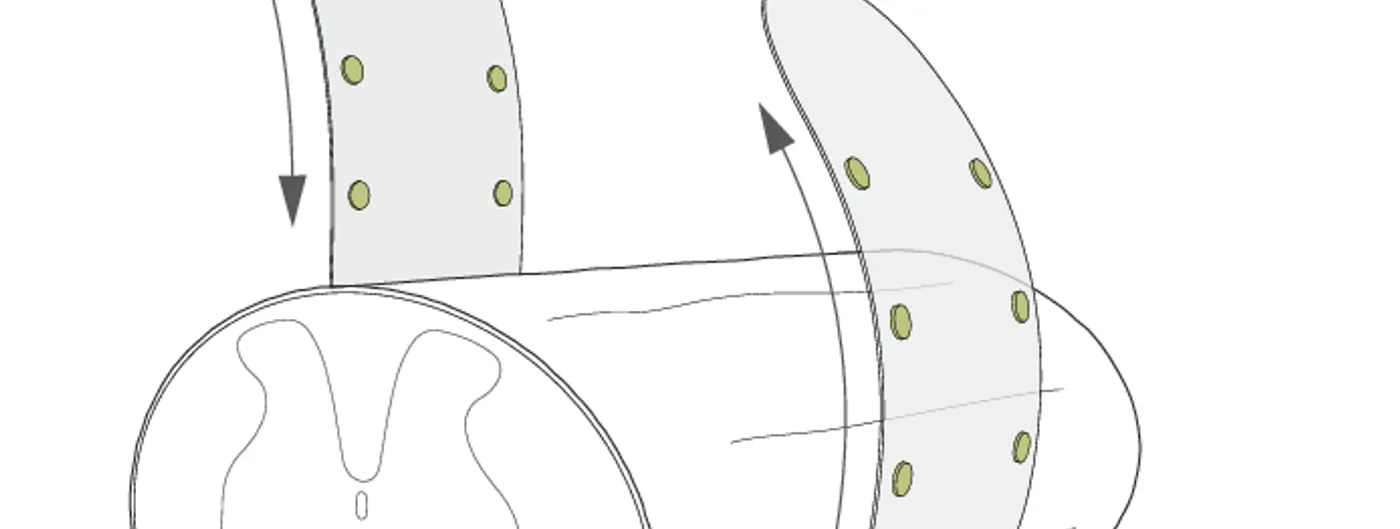
Houston Methodist / University of Cambridge, Nature Communications 2026 (CC BY 4.0)CC BY
A flexible electrode array that wraps the whole way around the spinal cord recorded three kinds of neural traffic at once in freely moving rats, in a study published in Nature Communications on 13 July 2026 by Houston Methodist and the University of Cambridge.
Spinal neurotechnology has generally taken one function at a time — movement, or sensation, or autonomic control of organs such as the bladder. The device the two groups built sits on the surface of the cord rather than penetrating it, and within the same recordings the team detected intended movement, classified different types of sensory information, and distinguished signals arriving from internal organs.
The design logic is not repair. Damiano Barone at Houston Methodist and George Malliaras at Cambridge describe the aim as carrying the signal around an injury rather than mending it — an alternative route rather than a restored one.
What exists is a recording capability in rodents, with feasibility also shown in larger anatomy. No chronic-injury model has been tested and no person has received the device. The authors put chronic-injury work ahead of any move toward human trials, which is the ordinary distance between a recording result and a therapy.