A wireless link through the dura cuts the tether on brain implants
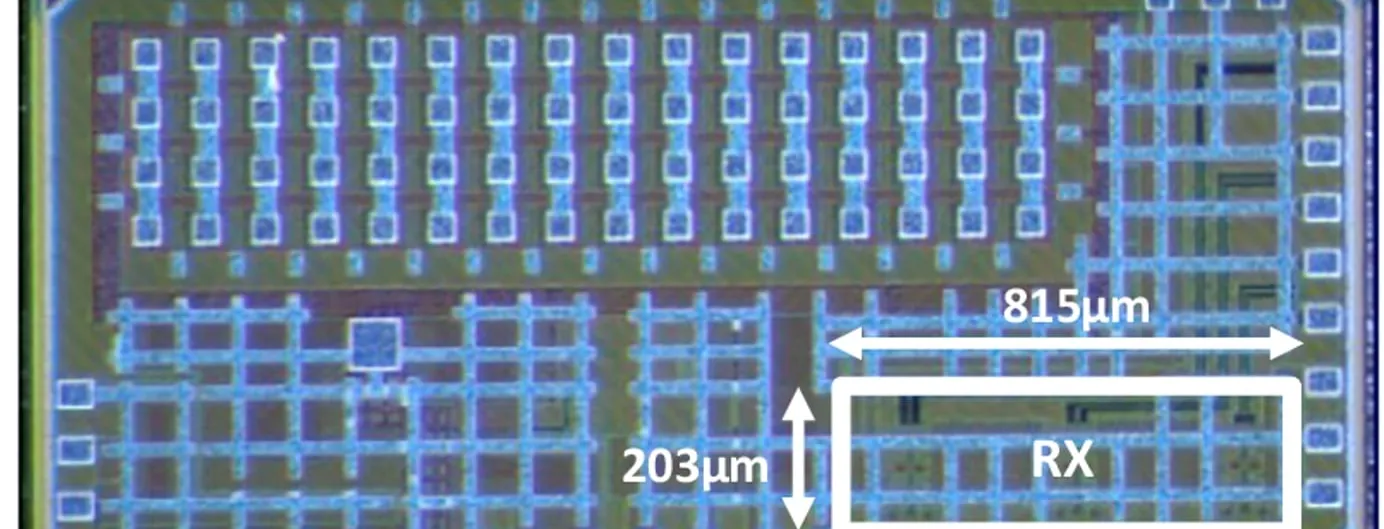
Shi et al., Communications Engineering 2026 (CC BY 4.0)CC BY
Engineers at imec in the Netherlands and Leuven, Eindhoven University of Technology and Erasmus MC in Rotterdam published an architecture on 1 September 2026 for getting data out of an intracortical implant without running a wire through the dura.
The design uses galvanic body-channel communication to carry signals transdurally between a subdural unit sitting on the cortex and an intracranial unit above the dura. The stated motivation is mechanical: a wire crossing that boundary restrains movement and contributes to the scar tissue that eventually covers electrodes. An event-based encoder the authors call Send-on-Delta compresses sparse neural data 7 to 12 times, peaking at 11.4 times. Reported performance is up to 500 Mbps at a bit error rate below ten to the minus five, with the subdural unit drawing 2.4 mW and running about an hour on a button cell at 20 per cent duty cycling.
No part of this was tested in a person. Validation covers rat hippocampal neuron cultures on chip, a human cadaveric head, and phantom and finite-element models. The authors state plainly that the cadaver work does not reproduce physiological cerebrospinal fluid or the effects of chronic implantation, which are the two conditions that decide whether an implant survives a decade.