Five days in an exoskeleton leaves a lasting mark on how people move
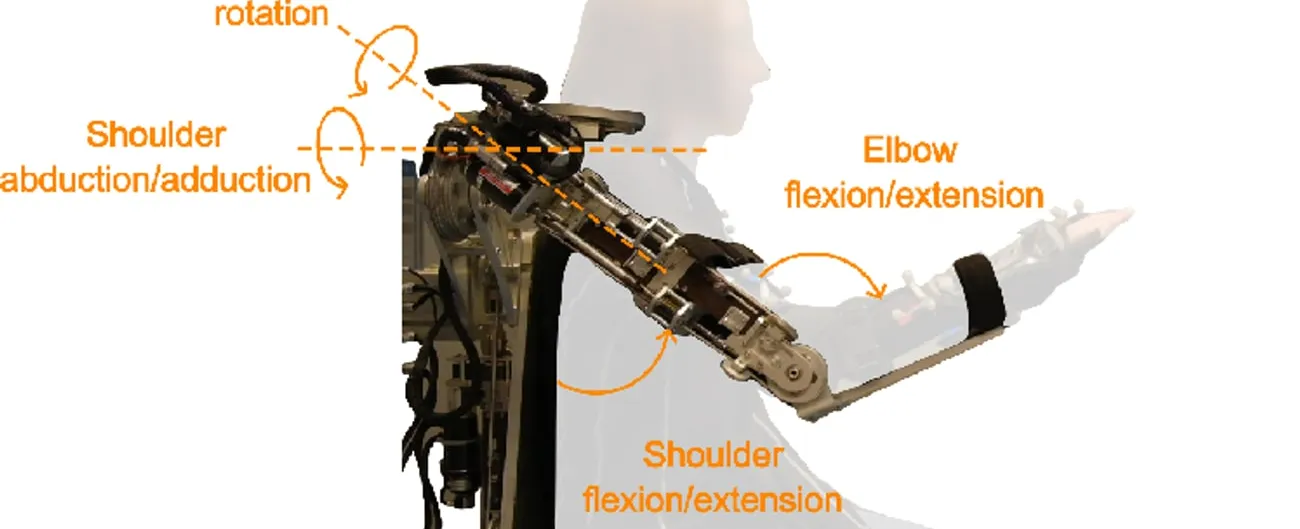
Researchers at Sorbonne Universite, CNRS and Inserm at the Institut des Systemes Intelligents et de Robotique, with Universite Paris Nanterre and the University of Brescia, published a study on 1 September 2026 asking what an exoskeleton does to the person after they take it off.
Twenty-four participants used an upper-limb robotic exoskeleton over five consecutive days in one of three conditions: low-magnitude gravitational support, a viscous force field, or no exoskeleton at all. Participants given gravitational support progressively used less shoulder and more elbow to do the same reaching task. Those exposed to the viscous field showed coordination disrupted at first, then recovering across the protocol.
The measures that did not move are what make this a finding. Task duration and joint range of motion showed no significant change, so the wearers performed the task about as well throughout. What changed was the internal allocation of the movement between joints, and the authors conclude that repeated exposure to small force fields can induce lasting changes in motor coordination.
An exoskeleton is usually evaluated on what the wearer can lift or how far they can walk. This asks a different question, and the answer is that the machine is quietly teaching the body a new habit that persists after the machine is gone.