Japan enters the HAL-3 exoskeleton into its technology heritage
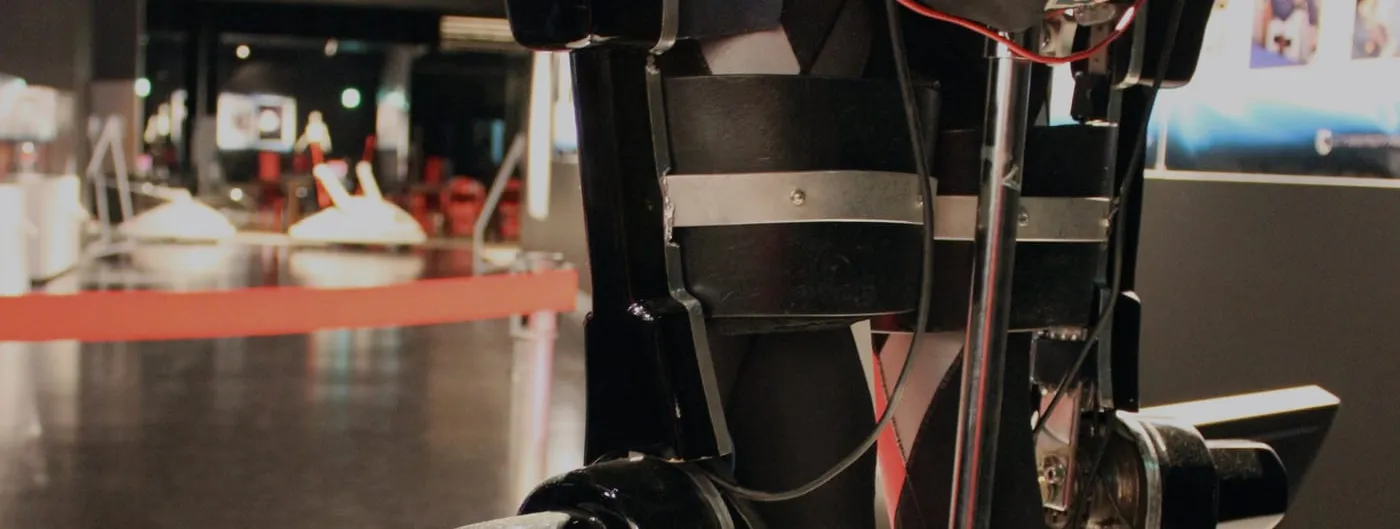
Yuichiro C. Katsumoto, via Wikimedia Commons (CC BY 2.0)CC BY

Japan’s National Museum of Nature and Science announced on 15 September 2026 that it had selected 13 new items for its register of Important Science and Technology Historical Materials, nicknamed Future Technology Heritage. Among them is HAL-3, the powered suit built in 2001 by the Cybernics Research Laboratory at the University of Tsukuba. The register now holds 408 items.
HAL — Hybrid Assistive Limb — works from the signal rather than the movement. Electrodes on the skin pick up the faint bioelectric potentials that arrive at a muscle when the brain orders it to contract, and the suit’s motors move the joint in the same instant the wearer intends to. The museum cited HAL-3 specifically for the miniaturisation that let the system leave the laboratory, which is what made the medical exoskeletons that followed practical. The third prototype in the series, it is the ancestor of the suits Cyberdyne later sold for rehabilitation.
Registration is not a prize for a new result; it is a judgement that something has already changed the field enough to be worth keeping. A panel exhibition of the 13 new entries runs from 29 September to 18 October at the museum in Ueno, Tokyo.