A home exoskeleton study looks past walking to daily tasks
Lifeward / product pagePress kit
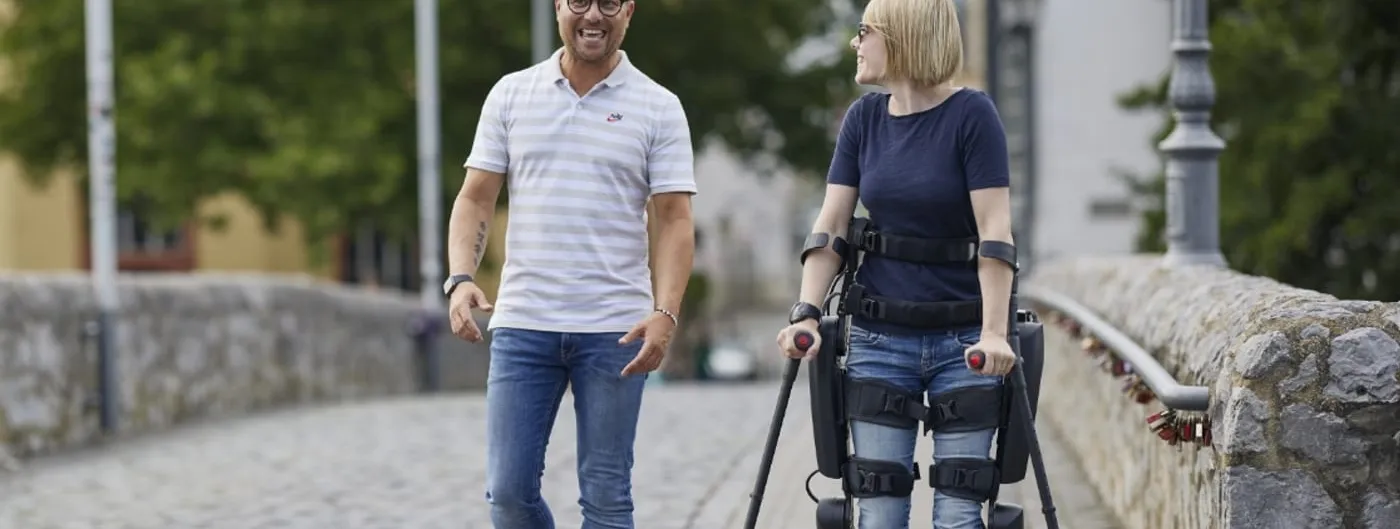
Personal exoskeletons are sold on walking, and measured on walking — metres covered, minutes upright, gait symmetry. A study published in the Internet Journal of Allied Health Sciences and Practice and reported by Lifeward on 15 September 2026 asked a different question: what does someone do while standing in one at home?
Twelve people with paraplegia from chronic spinal cord injury used the ReWalk personal exoskeleton in their own homes. All twelve completed kitchen activities while standing in the device; ten of the twelve completed grooming tasks. On the Canadian Occupational Performance Measure, participants reported gains in both perceived performance (P=.008) and satisfaction (P=.003), and a score on the reintegration-to-normal-living measure improved as well (P=.04). They reported significantly less pain than when using a wheelchair (P=.01), and eight of the twelve described improved bowel or bladder function.
The study is titled “Beyond Walking: Exploring Functional Use of Exoskeletons in the Home Environment,” and its limits are in its size: twelve participants, no control group, and outcomes that rest on what people said about their own performance and pain. What it establishes is narrower than a treatment effect and still useful — that the device is used for something once the lab door closes.