A DNA computer runs 100-bit arithmetic on heat, water and salt
Maynooth UniversityPress kit
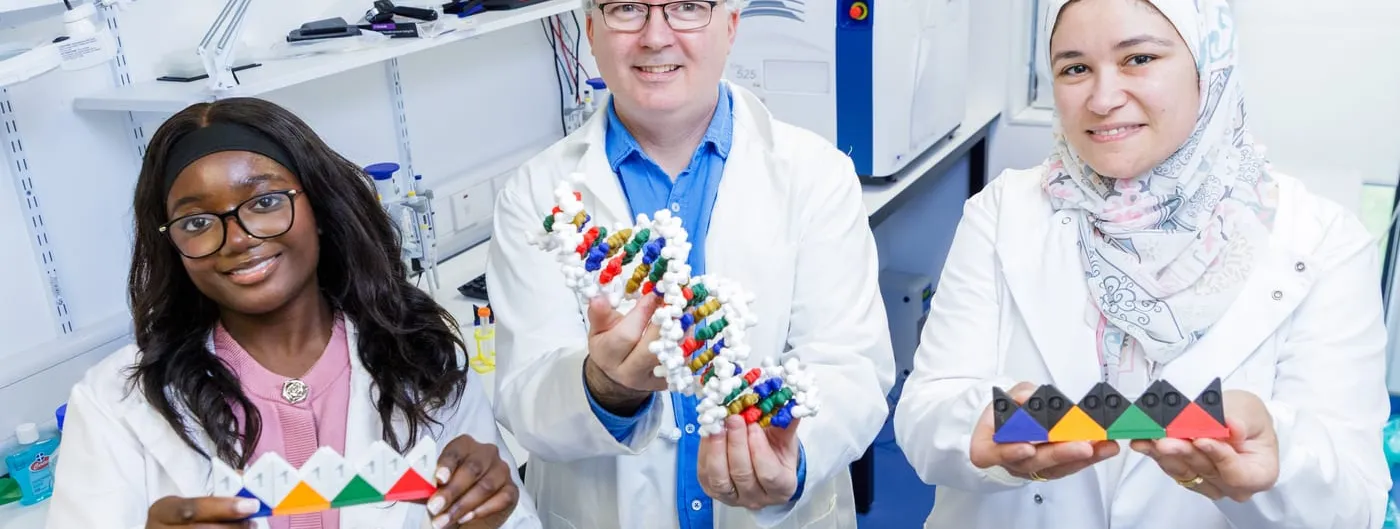
Researchers at the Hamilton Institute at Maynooth University reported in Nature on 16 September 2026 a molecular computer built from DNA. Short DNA strands and a longer DNA scaffold are mixed in a drop of salt water; a pulse of heat starts the reaction, the molecules assemble, and the structure they form is the answer. No continuous electricity is required.
The system performs multiplication, division and addition. The team ran ten programs, including computations on 100-bit numbers. One addition on numbers in the range of roughly 11 million to 34 million took up to 14 hours; 10 plus 3 took 30 seconds. The same material was reused for up to 25 calculations in a row.
The work was led by Damien Woods with Abeer Eshra and Tristan Sterin as joint first authors, alongside Constantine Evans and undergraduate researcher Janet Adio.
Speed is not the metric the group is competing on. Woods notes that 23% of Ireland’s electricity goes to computing and data storage, and the result is framed against energy cost rather than clock rate. The applications the authors name are long-term data storage, low-energy computation, and, further out, molecular systems that could run inside living cells to detect disease.