MIT swims a paper-thin robot on a single layer of muscle cells
Melanie Gonick, MITPress kit
Engineers in Ritu Raman’s lab at MIT have built a swimming robot powered by a single layer of living skeletal muscle, MIT announced on 29 September 2026. The work is published in Advanced Functional Materials under the title “2D skeletal muscle thin film actuators enhance efficiency of biohybrid robots”, with Maheera Bawa as first author.
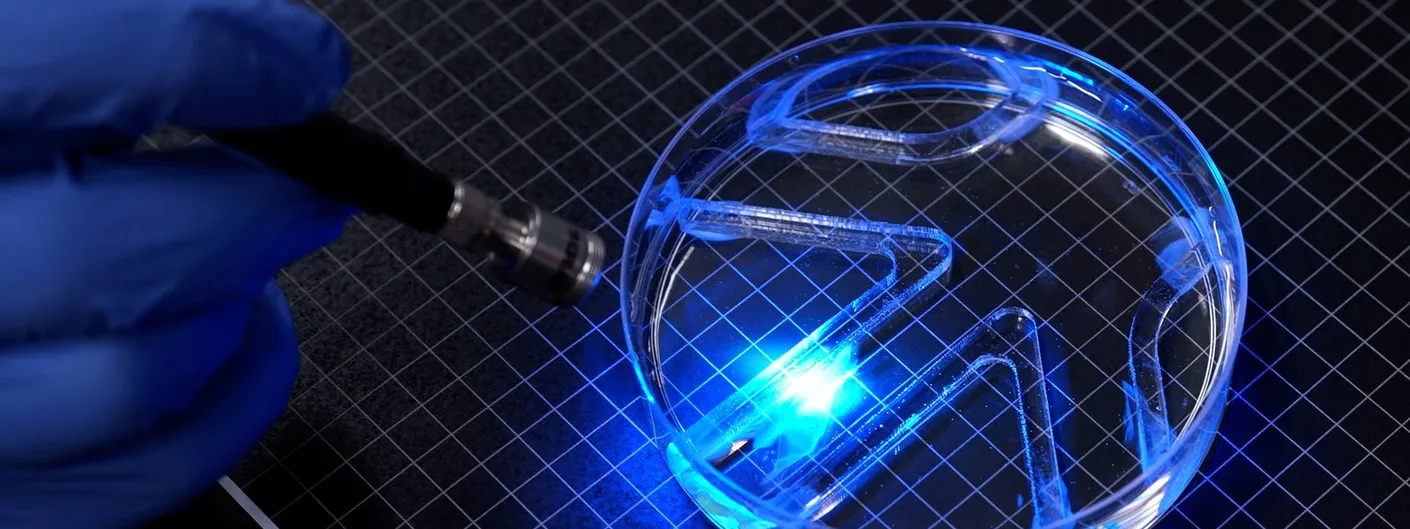
The robot’s skeleton is a 0.5-millimetre film of gelatin methacrylate, about the size of a stick of gum, stamped with grooves on both faces. A sheet of genetically engineered mouse muscle cells, thinner than a human hair, grows along those grooves and twitches when blue light hits it. Each fin carries its own patch of muscle, so flashing light on one side or the other steers the robot. In a water-filled maze it reached about four body lengths per minute.
Earlier muscle-driven robots relied on bulky three-dimensional blocks of lab-grown tissue that need millions of cells. According to MIT, this is the first thin, two-dimensional muscle-powered robot that can move on its own, a format that needs fewer cells and is cheaper to build. The team names environmental monitoring and, further out, precision microsurgery as uses. The Office of Naval Research funded part of the work.