A miniature digger arm lets novices match expert operators on day one
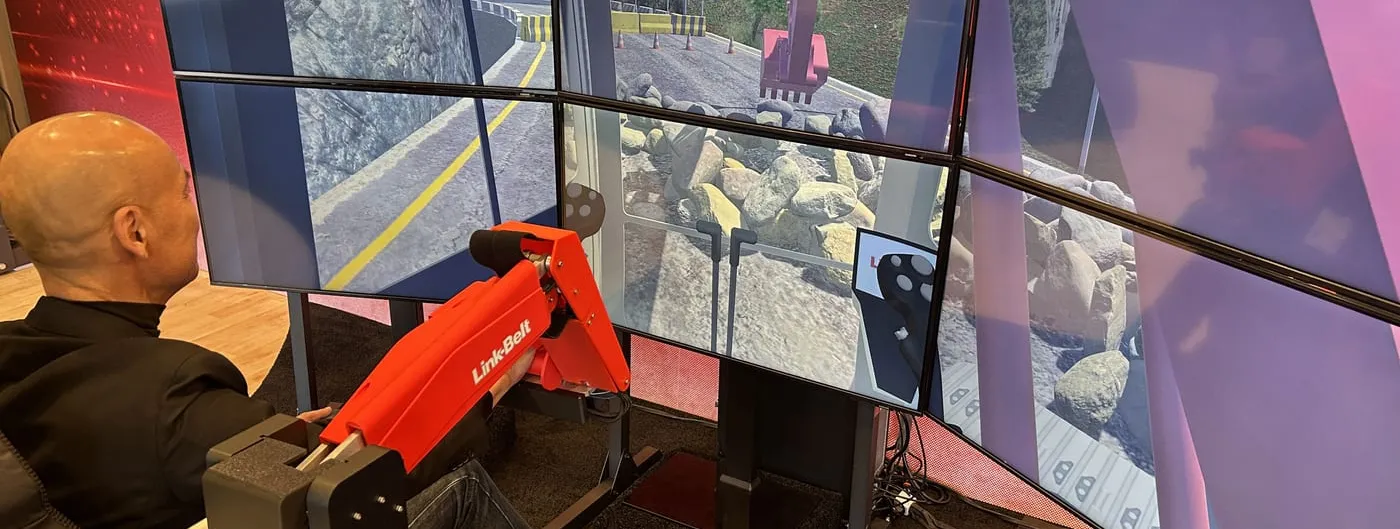
A team at MIT led by Hermano Krebs, a principal research scientist in mechanical engineering, has built a controller for excavators that abandons joysticks. The World-Space Interface is a miniature version of the machine’s own boom, arm and bucket: the operator grips it and moves it the way the full-size arm should move, while a wraparound six-screen display shows a virtual excavator mirroring the gesture.
The name states the claim: world-space, in Krebs’s gloss, is everything outside the operator — in this case outside the excavator’s cab. Conventional controls require the operator to hold a learned mapping between lever positions and machine motion. The interface performs that translation instead, and that mapping is where the training time goes.
The team built 15 virtual excavation environments — construction sites, highways, forest roads, riverbanks, mining areas, urban and rural settings — with tasks including scooping and dumping sand and gravel, digging and grading trenches, and clearing debris. Expert and novice volunteers trained an hour a day for seven days on the new interface and on joystick simulators.
Novices using the World-Space Interface performed on a par with experts from the first day. Novices on joysticks lagged experts initially and closed the gap over the week. The results are open access in the Journal of Computing in Civil Engineering, with collaborators from Sumitomo Heavy Industries.