A two-cell corneal graft improves sight in aniridia keratopathy
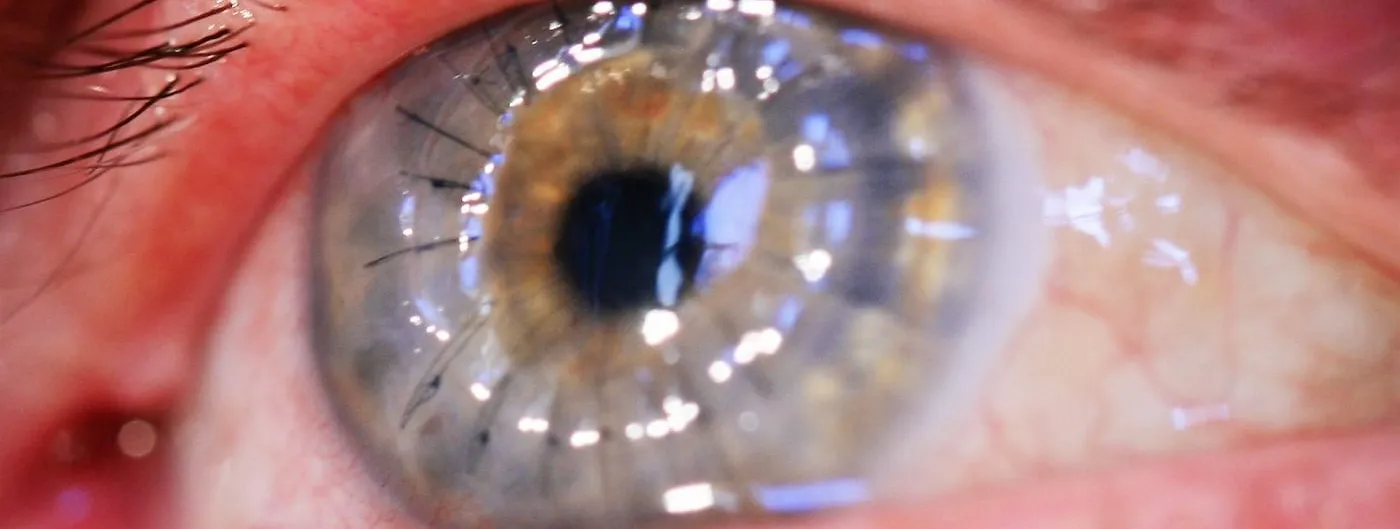
John Ricks, via Wikimedia CommonsPublic domain

Surgeons at Moorfields Eye Hospital and researchers at UCL treated nine adults who have congenital aniridia with advanced aniridia-related keratopathy, a progressive loss of the limbal stem cells that maintain the cornea. As the limbal population fails, the cornea clouds over. The condition affects between one in 40,000 and one in 100,000 people and had no established treatment.
The graft is a collagen scaffold seeded with two allogeneic cell types at once, limbal epithelial stem cells and stromal keratocytes. One eye of each patient was treated; the fellow eye was left alone and used for comparison. On the ocular surface score, treated eyes improved by a mean of 3.6 points at three months and 2.8 points at twelve, while fellow eyes moved by 0.4. UCL puts the visual acuity gain at an average of 24 letters on the ETDRS chart, close to five lines.
The trial was single-arm, open-label and nonrandomised, in nine people, and its authors say controlled studies with longer follow-up are needed. Sajjad Ahmad, who led it, describes the combination of two stem cell types on one scaffold as the first optical use of that approach. The team’s stated aim is a larger trial and, eventually, NHS adoption.
The paper went online on 23 July 2026; the press wave followed a month later.