Human pituitary organoids restore a stress hormone in a monkey
Tatsuma Kondo, Nagoya UniversityPress kit
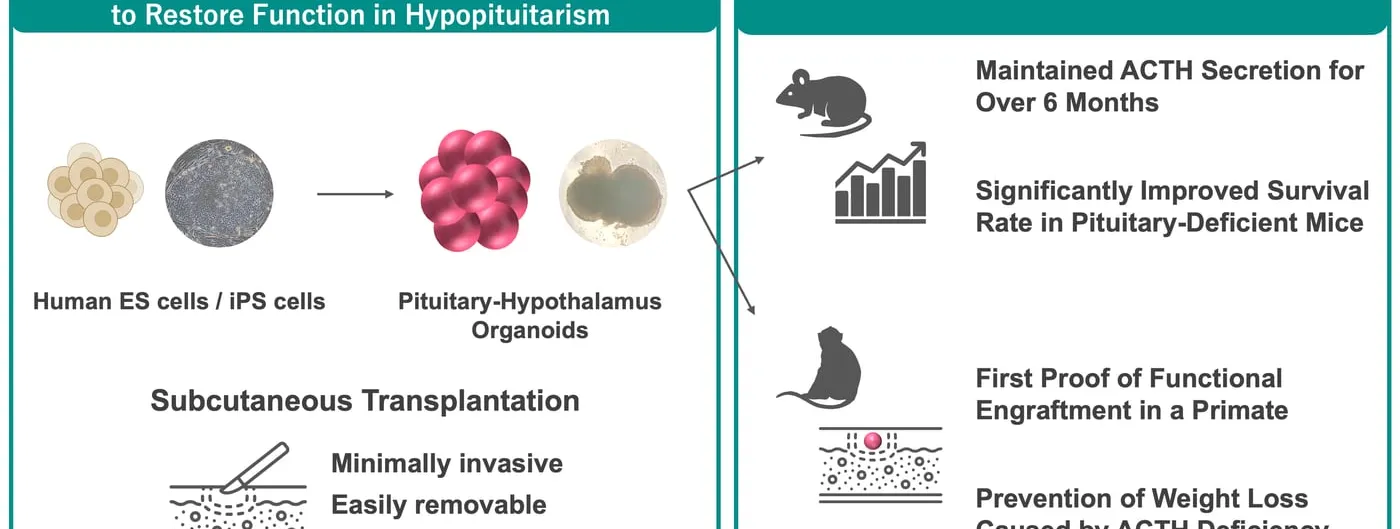
A Nagoya University team led by Hidetaka Suga reported the first transplant of lab-grown human pituitary tissue into a primate, in a paper in Stem Cell Research & Therapy announced on 1 October 2026. The tissue took the form of organoids grown from human pluripotent stem cells and containing cells that make adrenocorticotropic hormone, or ACTH, the signal that tells the adrenal glands to release cortisol.
The organoids were placed just under the skin, in fat or muscle, rather than in the brain. In mice they produced ACTH for more than six months. In a single macaque whose pituitary gland had been surgically removed, the transplant raised ACTH and cortisol and kept working for six weeks, and transplanted cells were still detectable three months later.
The team, with Tatsuma Kondo as first author, frames the result as a possible route to treating lifelong pituitary hormone deficiencies with living tissue. The primate result rests on one animal, and no human trial has been announced.