FDA accepts Nanoscope's BLA for optogenetic therapy MOGENRY
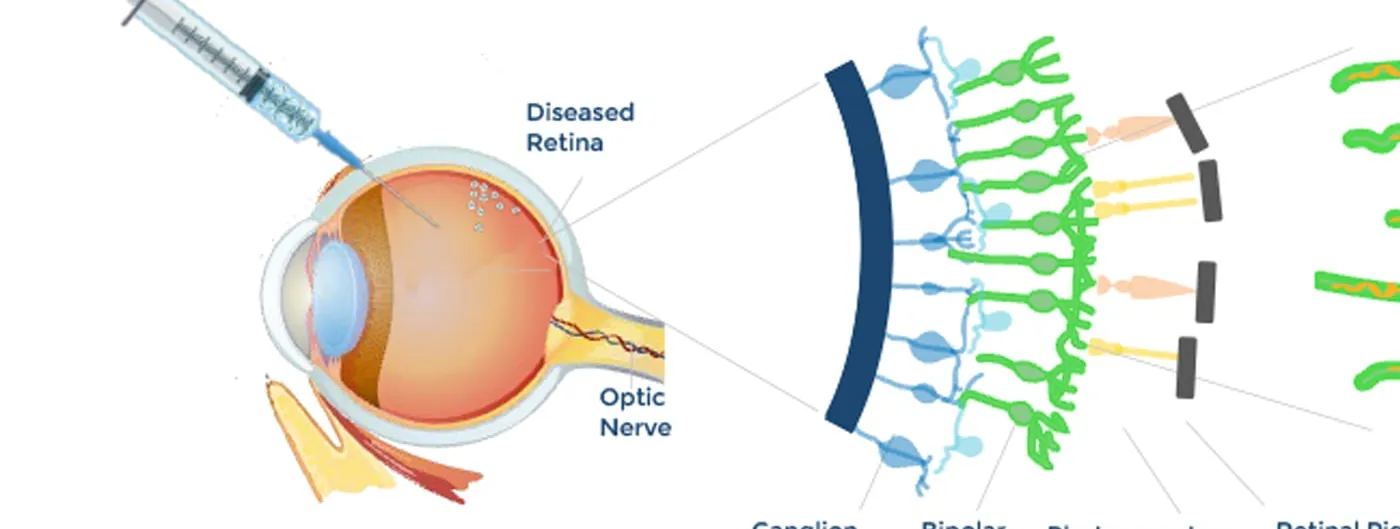
The US Food and Drug Administration accepted and filed Nanoscope Therapeutics’ Biologics License Application for MOGENRY on 9 September 2026. The therapy, sonpiretigene isteparvovec, is an optogenetic gene therapy for retinitis pigmentosa in patients who have already lost most of their sight.
Optogenetics does not repair the mutated gene that killed the photoreceptors. It installs a light-sensitive protein in the retinal cells that remain, making cells that were never meant to see respond to light. That is why Nanoscope describes the treatment as gene-agnostic: retinitis pigmentosa is caused by mutations in more than a hundred different genes, and a therapy that bypasses the photoreceptor entirely does not need to know which one a given patient carries. No genetic testing is required before dosing.
The application rests on the RESTORE Phase 2b/3 trial, a randomised, double-masked, sham-controlled study that Nanoscope says met its primary and key secondary endpoints with visual acuity improvements at weeks 52 and 76, on the REMAIN long-term follow-up of those patients, and on an earlier Phase 1/2a study. The company reports no treatment-related serious adverse events. MOGENRY is given as a single in-office intravitreal injection, with no surgery and no repeat dosing. The release names no PDUFA action date.