NCNP and Waseda train a caregiving humanoid on prediction error
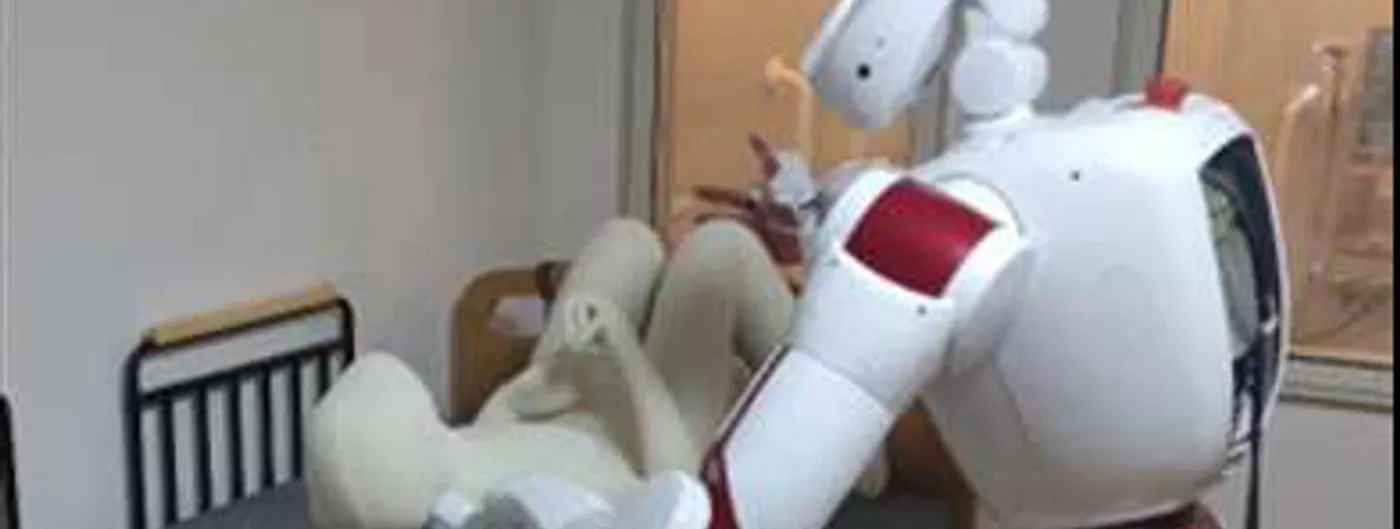
Researchers at Japan’s National Center of Neurology and Psychiatry and Waseda University published a model in Science Advances on 15 August 2026 that taught a humanoid robot two caregiving movements from a single computational principle: minimising prediction error.
The model is a scalable PV-RNN, built on predictive processing — the account, also called the free energy principle, in which a brain continuously predicts its own sensory input and learns from the gap. It takes 32,256 dimensions of binocular visual input at three resolutions together with 28 proprioceptive signals from the arms’ joint angles and torques, and learns end to end rather than through hand-designed features.
The robot was Dry-AIREC, built by Tokyo Robotics. Trained on teleoperated demonstrations, it learned to reposition a body from lying to sitting and to wipe it with a towel — two tasks central to caring for people with limited mobility.
The authors’ claim beyond engineering is about emergence: several information-processing traits associated with the brain appeared inside the model without being programmed for, including inferring the situation from body sensing when vision was unclear, switching between sub-actions on its own, and estimating objects it could not see.
One limit governs the rest. The care recipient was a mannequin weighing 8 kg, not a person, and the technical description above comes from the team’s preprint. Nothing here has been tested on a patient.