A wearable patch taps out which hazard it has just detected
North Carolina State UniversityPress kit
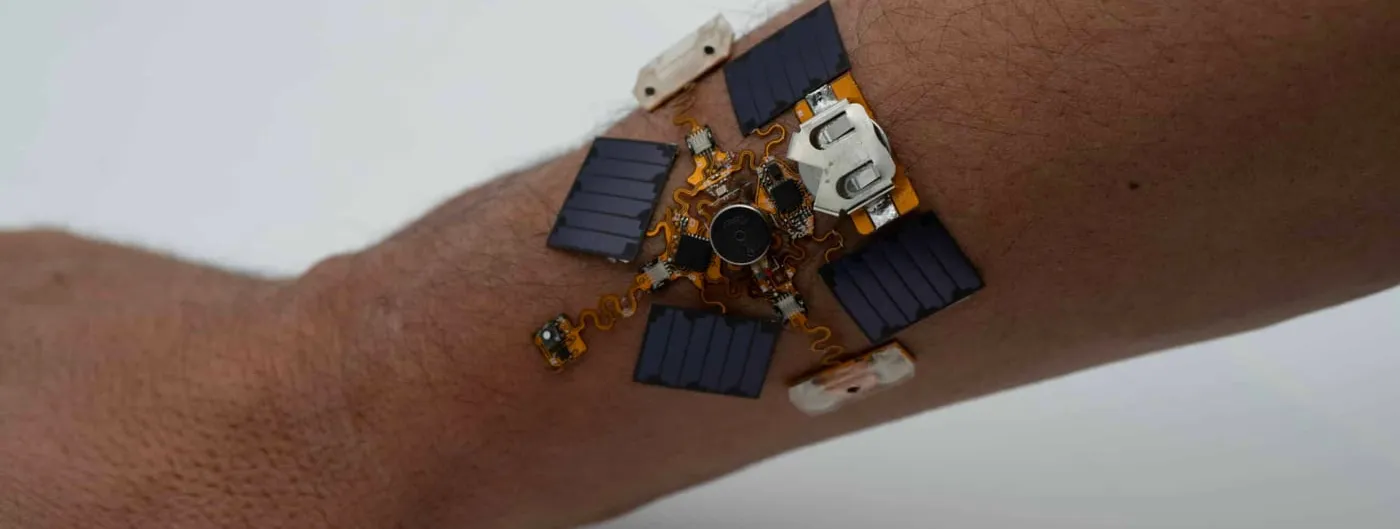
Researchers at North Carolina State University built a skin patch, slightly smaller than a driver’s licence, that watches for six environmental hazards — among them heavy metals in water and dangerous gases — and reports what it finds by vibrating against the wearer. The work was published in the Cell Press journal Device on 24 July 2026 as “Multimodal, wearable sensors with tactile communication capabilities for human and robotic applications”.
The interesting part is not the sensing but the channel. A phone notification requires the wearer to be looking at a phone, which is the wrong assumption when the hazard is a gas. Each hazard triggers its own haptic sequence, so the alert names the danger rather than merely announcing one. To make those sequences distinguishable the team put textured surfaces between the motor and the skin, varying the size and spacing of the bumps to change how a vibration is perceived — the patch is, in effect, spelling.
The patch carries a small battery and wears an array of thin-film photovoltaic cells on its outer face, harvesting light while worn, which gets it to roughly 24 hours of operation.
This is proof-of-concept work. The team reports the device detected hazardous substances and fired the matching haptic response; it is not a product, and no field deployment is claimed.