NSF funds a centre on humans and robots adapting to each other
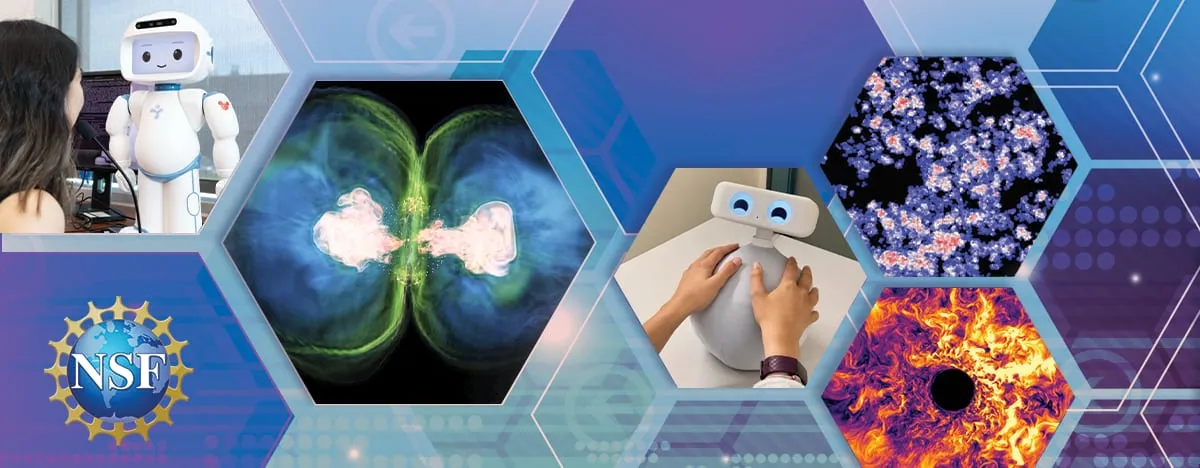
The U.S. National Science Foundation announced on 26 August 2026 that it is funding three new Science and Technology Centers with $90 million over five years, about $6 million a year each and renewable for a further five. One of the three is the Center for Human and Robot Co-Adaptation, led by the University of Texas at Austin.
Its subject is the two-way version of a problem usually posed one way. Assistive and service robotics is generally framed as making a robot competent enough for a human environment. This centre takes the adaptation as mutual: people change how they move, speak and arrange their homes around a machine, and the machine has to track that. The award covers homes, hospitals, workplaces and public spaces, and combines robotics, AI and human-factors research so that robots learn from the people using them and adapt physically and cognitively to different users and settings.
The other two centres are TEMPEST at Michigan State University, on multi-physics and turbulence, and GENIE at Northwestern University, on genome intelligence engineering.
This is a funding decision, not a result. What it fixes is a decade of attention and a programme structure, at a scale that determines which questions in assistive robotics get asked in the United States.