The human hippocampus remodels itself between 50 and 75
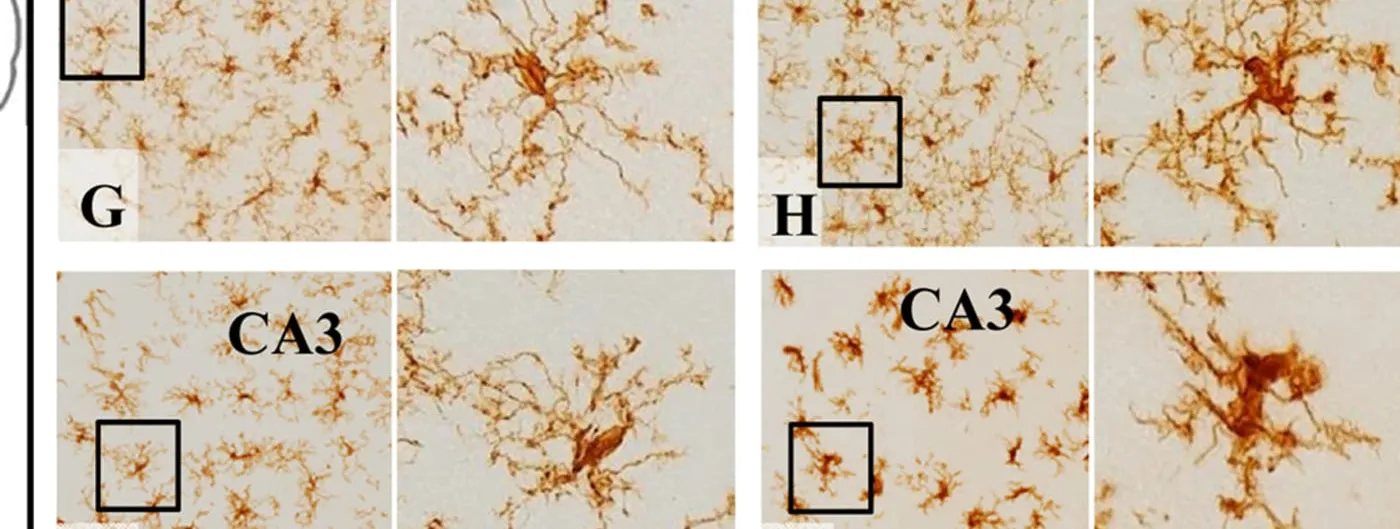
Fernandez-Arjona et al., via Wikimedia Commons (CC BY 4.0)CC BY

Brain aging is usually described as decline: cells are lost, connections thin, function drops. A study led by the New York Genome Center with Columbia, UC San Diego and UC Irvine, published in Science and reported on 15 September 2026, describes something more specific in the hippocampus — a coordinated changeover concentrated roughly between the ages of 50 and 75.
Three things move together in that window. The microglia that arrive during embryonic development and normally stay for life decline, and are increasingly replaced by cells whose molecular signatures resemble immune cells from the blood, carrying stronger inflammatory programmes. The cell populations that maintain the blood-brain barrier decline substantially. And across several cell types, the three-dimensional folding of the genome — which decides which genes sit near which regulatory elements — becomes less orderly.
The three are plausibly one story: a barrier that leaks lets blood-derived cells in, and the resident population they displace behaves differently. The paper reframes midlife brain aging as a remodelling of immune and vascular systems rather than a slow fade, which matters mainly because it names a window and a mechanism to aim at. Age is the largest risk factor for Alzheimer’s disease, and an interval when the tissue is visibly reorganising is a more tractable target than age itself.