Paradromics' first participant speaks her own words in real time
Michigan Medicine, via ParadromicsPress kit
Paradromics said on 14 September 2026 that the first participant in its Connect-One early feasibility study has used the Connexus brain-computer interface for real-time speech and text. The participant, a Michigan woman in her sixties with a progressive motor neuron disease that had left her with severe dysarthria, received the implant in June 2026 at University of Michigan Health.
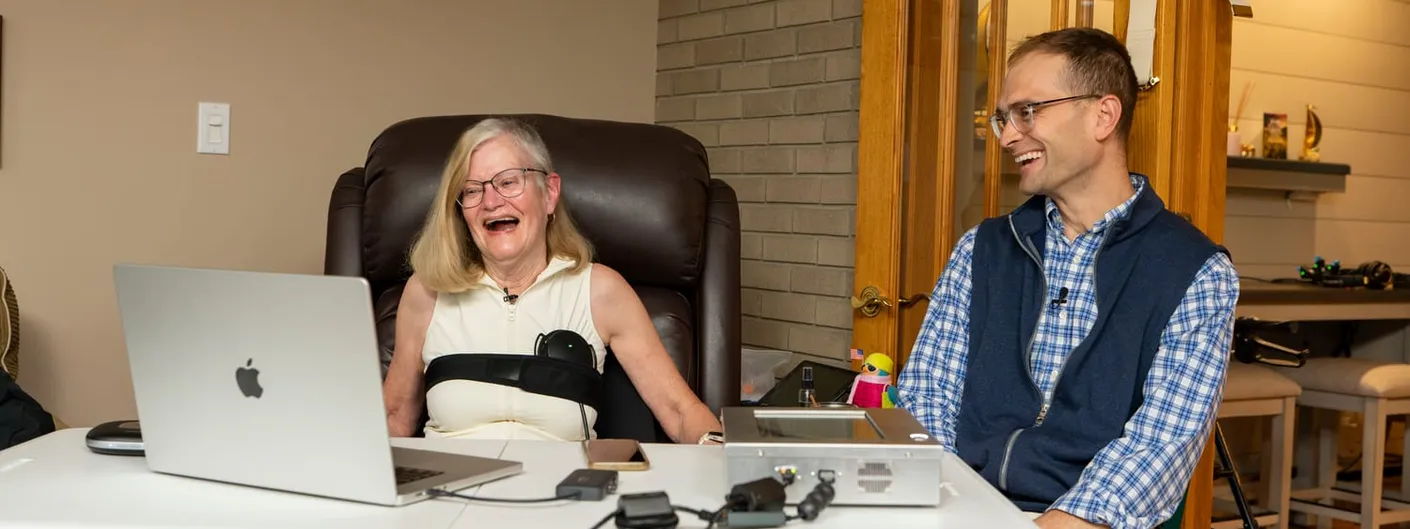
What changed is the kind of task. Earlier sessions were researcher-selected copy work, in which the participant reproduced sentences chosen for her. In the sessions reported here she chose her own words, answered open-ended questions put to her by the neurosurgeon Matthew Willsey, and spoke with her grandchildren on a live phone call. Her first self-composed sentence was “Okay, I have a lot to say.”
The company also reports that recordings from the device, which reads individual neurons across hundreds of channels, distinguish attempted speech — when a person tries to produce sound — from imagined speech, when language is generated internally with no attempt to speak. The study runs under an FDA investigational device exemption granted in November 2025, with David Brandman of UC Davis Health as lead principal investigator and Daniel Rubin of Mass General Brigham among the investigators.
This is one participant at one site, and the results were announced by the company rather than published in a peer-reviewed journal.