Three of 1,357 cleared AI devices were tested on patient outcomes
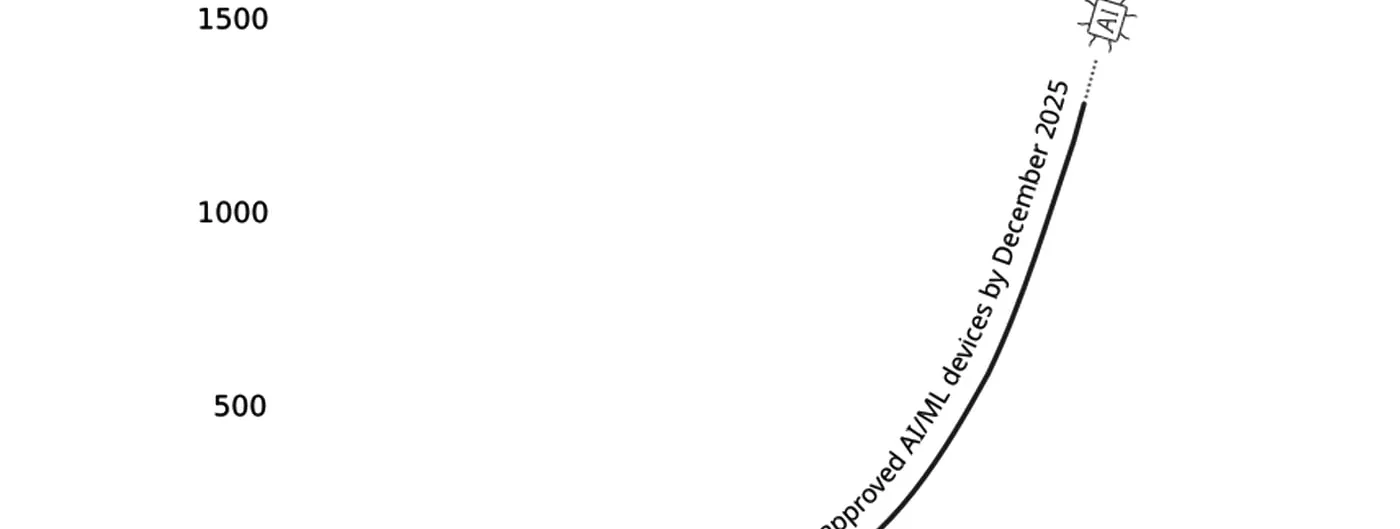
Rawan Abulibdeh, Leo Anthony Celi and colleagues went through every AI/ML-enabled medical device the FDA had cleared or approved as of 5 December 2025 and looked for evidence that any of them helped a patient. The paper was published in PLOS Digital Health on 19 August 2026 (doi 10.1371/journal.pdig.0001597).
Of 1,357 devices, 34 — 2.5% — were linked to a registered prospective clinical trial. Twelve posted results. Twelve had a peer-reviewed publication. Three, 0.2%, were evaluated against a patient-centered outcome such as mortality, morbidity or readmission.
The authors put the reason plainly: the 510(k) pathway asks whether a device is substantially equivalent to one already on the market, not whether it changes what happens to the person being scanned. Equivalence is a claim about the device. It carries no claim about the patient.
The validation that does exist is also narrow. The studies clustered in well-resourced settings and excluded pregnant women, people over 75 and non-English speakers — groups that will nonetheless be run through the same software.
It lands the same week the FDA opened its docket on generative AI devices, on a framework whose evidentiary floor this paper is measuring.