RMIT built a vision chip that remembers what it saw
RMIT UniversityPress kit
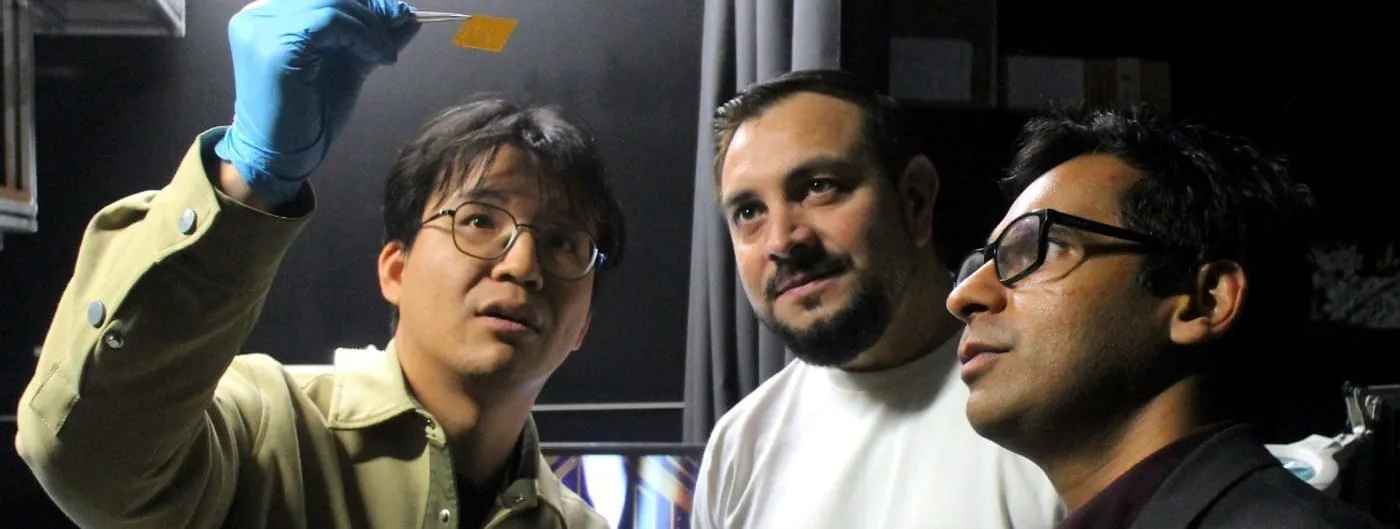
Researchers at RMIT University in Melbourne announced on 9 September 2026 a prototype neuromorphic vision device that collapses three jobs into one piece of material. The sensing chip is 2 cm by 2 cm, made from atom-thin molybdenum disulfide, and sits in a 15 by 14 by 3 cm enclosure holding the supporting electronics.
Conventional machine vision separates the camera from the memory from the processor, and pays for it in the data shuttled between them. The RMIT device senses light, holds what it saw as memory, and processes it in place — the arrangement a retina uses. In laboratory tests it recognised numbers, shapes and movement, detected changes in its surroundings, and did the processing locally rather than shipping frames elsewhere.
The work comes from the Centre for Opto-electronic Materials and Sensors, led by Sumeet Walia with Taimur Ahmed, and is published across two papers, in ACS Applied Materials and Interfaces and Advanced Materials Technologies. An international patent application has been filed under the Patent Cooperation Treaty.
No animal or human testing has taken place. Walia is explicit that practical applications remain years away, and names machine vision, autonomous vehicles and robotics alongside a bionic eye as the eventual destinations.