Two humanoid robots assist a surgeon through a gallbladder removal
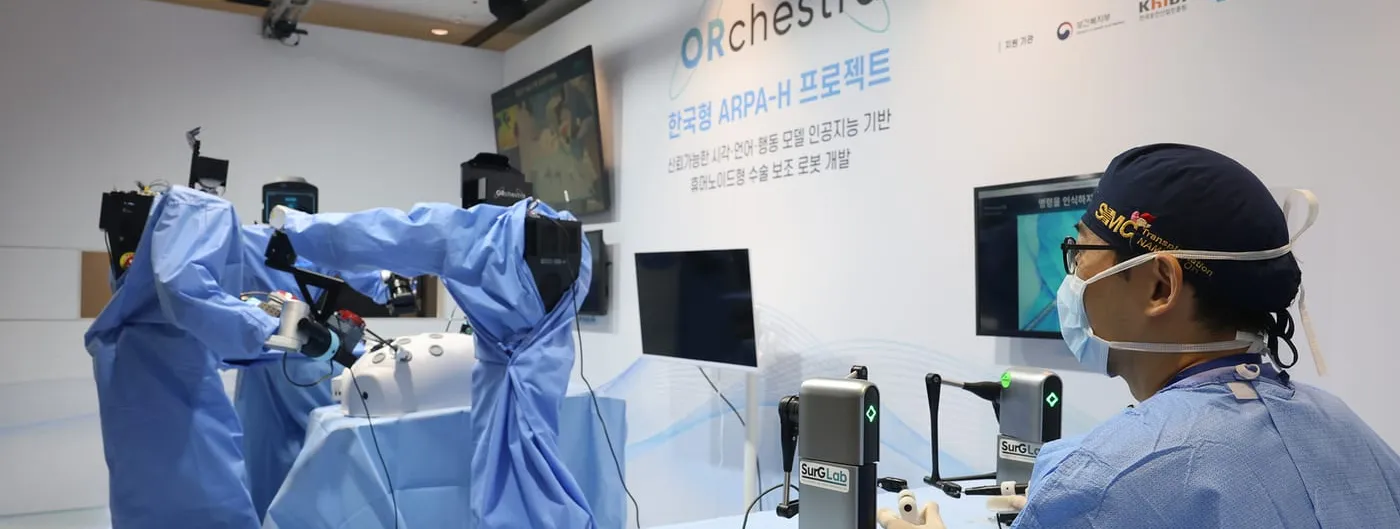
Samsung Medical Center (courtesy photo, via Korea Biomedical Review)Press kit
At Samsung Medical Center in Seoul on 16 September 2026, transplant surgery professor Oh Nam-kee removed a gallbladder from goat liver tissue with no human assistants in the room. Two humanoid robots took those roles: one handed him instruments and took them back, the other held the endoscope and retracted tissue.
This is a different proposition from the surgical robots already in hospitals. A da Vinci system is the surgeon’s hands, extended and steadied. These robots are the people standing next to the surgeon — the scrub nurse and the assistant — and they respond to spoken commands rather than to a console.
The reported bench figures are a 100% grip rate across five instruments and a 98.7% delivery rate, with motion beginning within two seconds of a command against a target of under one second. Two seconds is a long time when a surgeon’s hand is out.
The system comes from the ORchestra consortium: Samsung Medical Center with Rainbow Robotics, AIDIN ROBOTICS, Seoul National University, Sungkyunkwan University, the National Cancer Center and Jeonbuk National University Hospital, on about 13.84 billion won over five years. The demonstration was on animal tissue. A first human trial is targeted for 2029.