Science Corp's PRIMA retinal implant goes on sale across Europe
Science Corporation / newsroomPress kit
Science Corporation began commercial sales of PRIMA in Europe on 22 July 2026, after the notified body DEKRA issued a CE mark under the EU Medical Device Regulation covering 30 countries. PRIMA treats geographic atrophy caused by age-related macular degeneration, which destroys central vision; Science describes it as the only treatment shown in trials to restore functional central vision in that condition.
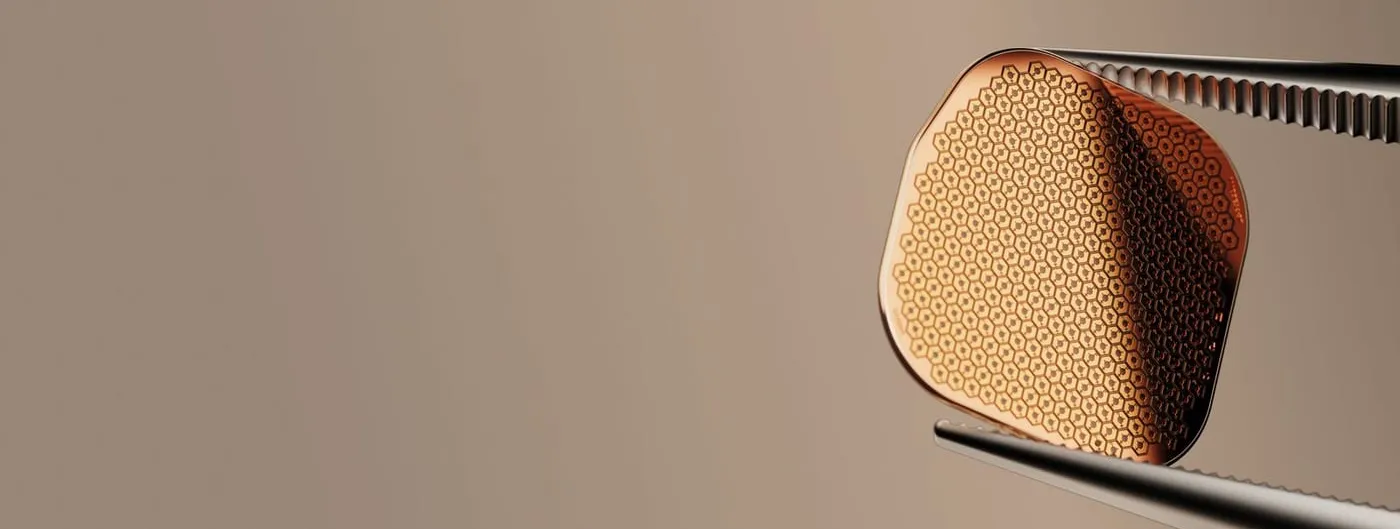
The implant is a 2 mm square photovoltaic chip carrying 378 pixels, placed beneath the retina. It has no wires and no battery. A camera mounted on a pair of glasses films the scene, and a projector facing the eye sends the processed image to the chip as invisible near-infrared light, which the pixels convert into electrical stimulation of the retinal cells that the disease has left intact.
In the PRIMAvera trial, 38 patients were implanted at 17 sites across five countries. Science reports a mean improvement of 25.5 letters — more than five lines on an ETDRS chart — with 84% of patients able to read letters, numbers and words, and 80% gaining at least 0.2 logMAR of prosthetic visual acuity.
PRIMA remains investigational everywhere outside the EU. The FDA has granted it Breakthrough Device status and two Humanitarian Use Device designations, but Science must still obtain a Humanitarian Device Exemption before selling in the United States. The first commercial implant is expected in Germany.