Semaglutide started late in life extends lifespan in female mice
Understanding Animal Research, via Wikimedia Commons (CC BY-SA 4.0)CC BY-SA

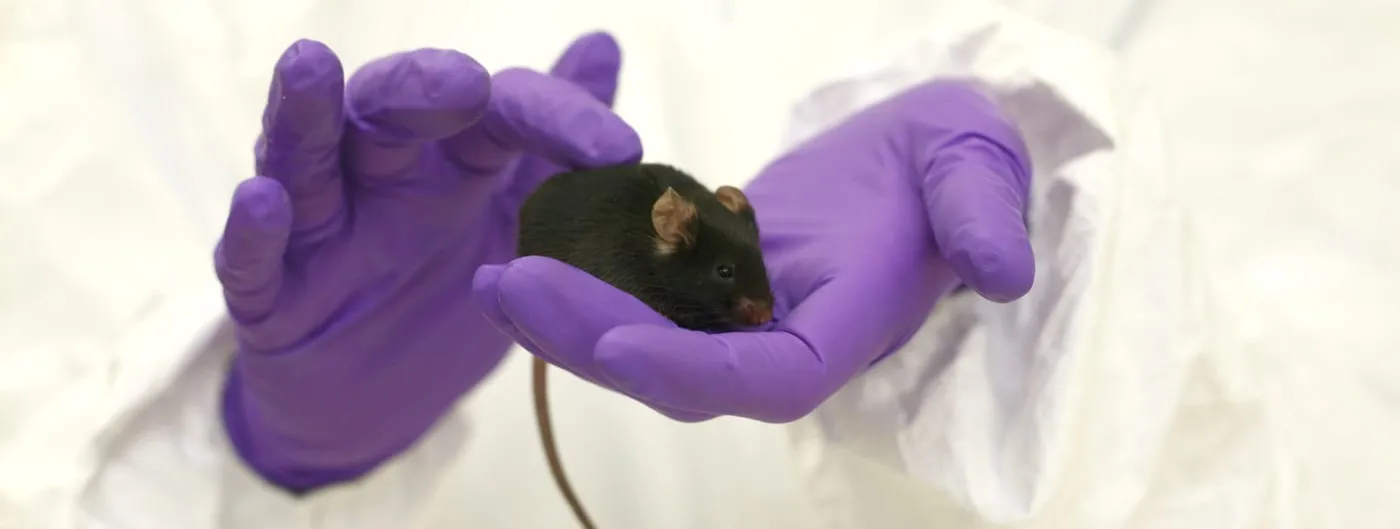
A team led by Yufan Feng and Danica Chen at the University of California, Berkeley reported in Nature on 2 September 2026 that semaglutide, the GLP-1 receptor agonist sold as Ozempic and Wegovy, extended lifespan in mice when treatment began late in life. Dosing started at 20 months in female C57BL/6 mice. Animals treated to the end of life had a median lifespan of 834 days against 742 days in untreated controls — 92 days, or about 12%. Treated mice also did better on muscle and cognitive measures, and gene expression showed reduced inflammation and other hallmarks of ageing.
The comparison that gives the result its weight is with calorie restriction, the oldest reliable lifespan intervention in the field. A second group received a 24% calorie-restricted diet matched to the feeding pattern of the treated animals. Semaglutide-treated mice outperformed that group on exploratory behaviour, spatial memory and blood-sugar control, and their metabolic rate stayed largely unchanged where the restricted animals’ fell.
Two limits are the paper’s own. Every animal was female, so the study says nothing about males. And these are mice: the work was funded by the National Institute on Aging and the National Institute of Food and Agriculture, and the authors hold that translation to people needs long-term clinical study. Tens of millions of people already take these drugs for weight and diabetes, which is what makes the ageing question worth asking rather than answered.