A Wuhan hospital reports central China's first fully invasive BCI implant
China News ServicePress kit
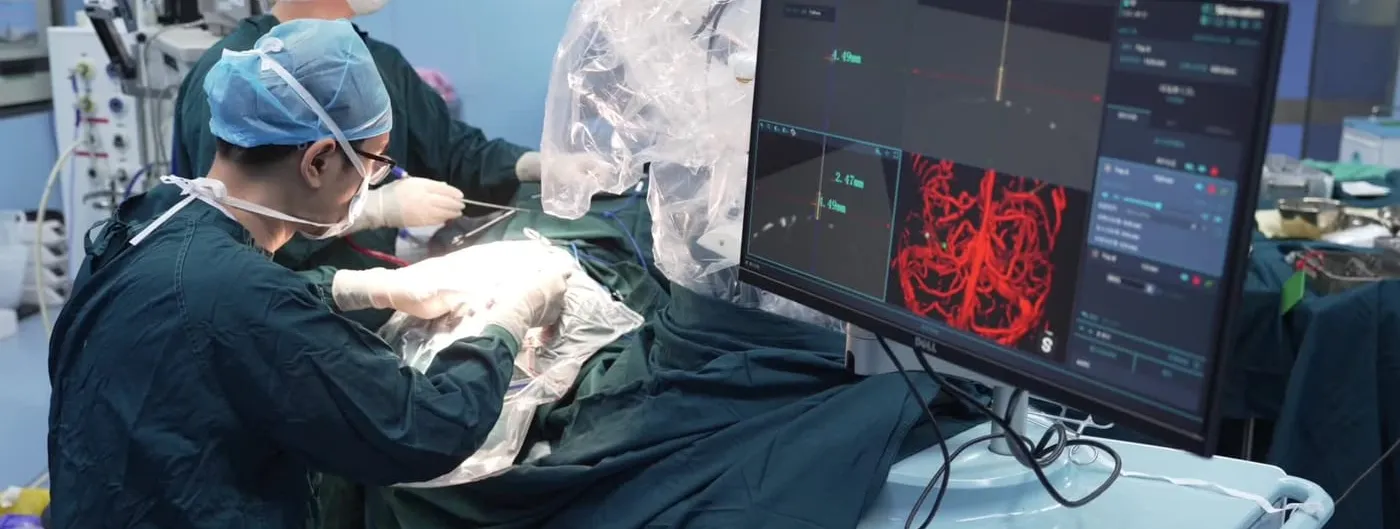
Tongji Hospital, affiliated with the Tongji Medical College of Huazhong University of Science and Technology in Wuhan, announced on 13 August 2026 that it had implanted a brain-computer interface in a 55-year-old woman with high paraplegia from a spinal cord injury, bedridden for two years. The hospital describes it as the first fully invasive BCI surgery performed in central China.
Eight electrodes were placed in the motor cortex. China News Service reports them as dozens of times thinner than a human hair, and the implanted product as holding innovative-medical-device designation from the National Medical Products Administration, the regulatory track China uses to move novel devices through review faster.
What the patient can do with it is, at this point, a plan rather than a result. The stated programme is closed-loop training toward cursor control, phone control and wheelchair control, with restoration of fine upper-limb motor function as the longer objective. No decoding accuracy, channel count or training schedule has been published, and the account is single-sourced in Chinese with no English release from the hospital.
The geography is the reportable part. Invasive BCI surgery in China has so far clustered in Beijing, Shanghai and Zhejiang; this is the procedure moving inland.