AI guides a live brain operation and the patient keeps his sight
UCLHPress kit
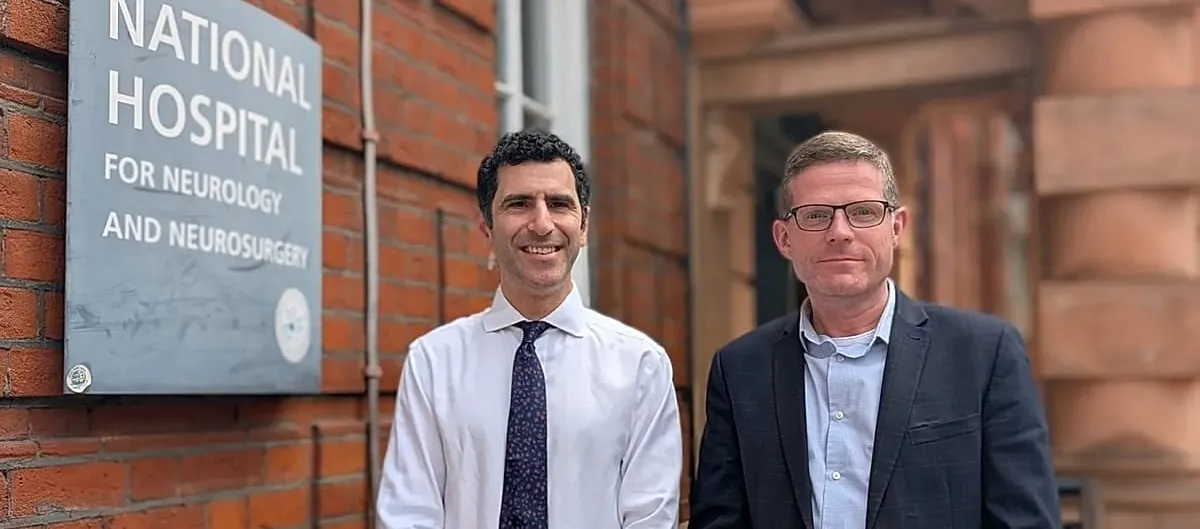
University College London Hospitals disclosed on 27 August 2026 that surgeons at the National Hospital for Neurology and Neurosurgery had removed a brain tumour with an AI system reading the operation as it happened. Rhys Hibbert, 48, from Bedfordshire, was the first patient. The operation took place in May 2026, and the trust held the details until his recovery was clear.
What separates the system from existing surgical navigation is the input. Image guidance normally works from scans taken before the incision, which stop matching the anatomy once tissue shifts. This AI analysed the live endoscopic video feed and colour-coded structures at the base of the skull, where the pituitary gland sits about the size of a marble among the blood vessels and the nerves that carry sight. The tumour was removed and Hibbert’s vision was preserved.
The software was built at the UCL Hawkes Institute and funded by the National Institute for Health and Care Research, and it runs on an NVIDIA Clara IGX platform intended for real-time AI inside medical devices. Hani Marcus, consultant neurosurgeon at the hospital and professor of neurosurgery at the UCL Queen Square Institute of Neurology, operated alongside surgical resident Danyal Khan. The procedure is part of a clinical trial, so this is one patient rather than an approved technique.