A printed zirconia textile cools its wearer and harvests motion power
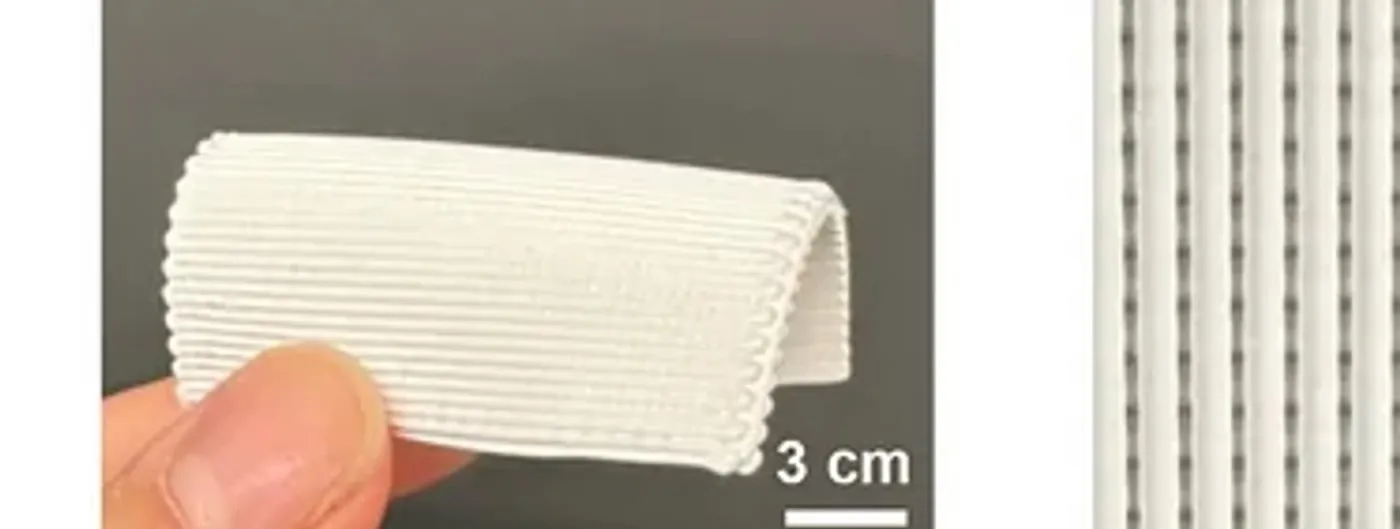
Engineers at the University of Illinois Urbana-Champaign have printed a single-layer textile that cools the body in sunlight and generates electrical signals from its wearer’s movement. The work, from the lab of mechanical engineer Lili Cai, is published in Advanced Science (DOI 10.1002/advs.76121) and was announced by the Grainger College of Engineering on 10 September 2026.
The material is a zirconium oxide nanocomposite laid down by direct ink writing, a form of 3D printing, into a flexible, breathable fibre structure. Zirconia’s high refractive index scatters sunlight: the fabric reflects 96% of incoming solar radiation and emits 97% in the mid-infrared, and in outdoor tests it stayed 3 to 6 °C below the surrounding air under direct sun.
The same particles make the fabric triboelectric, so contact and motion against the skin produce charge. The textile reached a peak power density of 47 mW per square metre and held a stable output over more than 30,000 cycles. The team used those motion signals to switch on Joule heating in a conductive underlayer, a demonstration of clothing that cools at rest in the sun and warms on cue, with no separate sensor or battery layer.