A wrist sensor tracks arm recovery after stroke
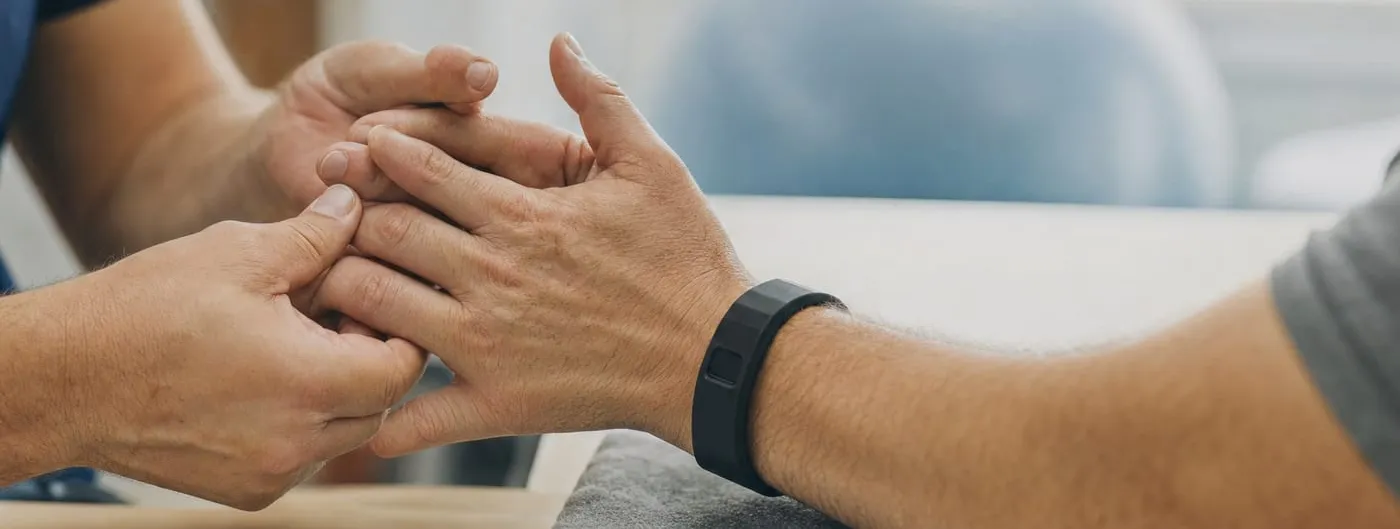
AI-generated illustrationAI-generated illustration
A team led by Sunghoon Ivan Lee at the University of Massachusetts Amherst reported on 30 September 2026, in Science Translational Medicine, a wrist-worn sensor that follows how the arm recovers after a stroke. About 77 percent of people who have a stroke have trouble moving an arm afterwards.
The device is an accelerometer worn on the wrist, paired with a machine-learning model that estimates upper-limb impairment continuously from how the arm moves. According to the university, its estimates were 40 to 50 percent more accurate than clinician assessments.
The researchers also tested what the measure would mean for rehabilitation research. Re-running an earlier rehabilitation study with the wearable as the outcome measure reached statistical significance with half as many participants. The work involved Washington University in St. Louis, the Shirley Ryan AbilityLab and Harvard Medical School with Mass General Brigham. The sensor monitors recovery; it does not itself treat the arm.