A bionic arm goes home for the first time
University of Utah HealthPress kit
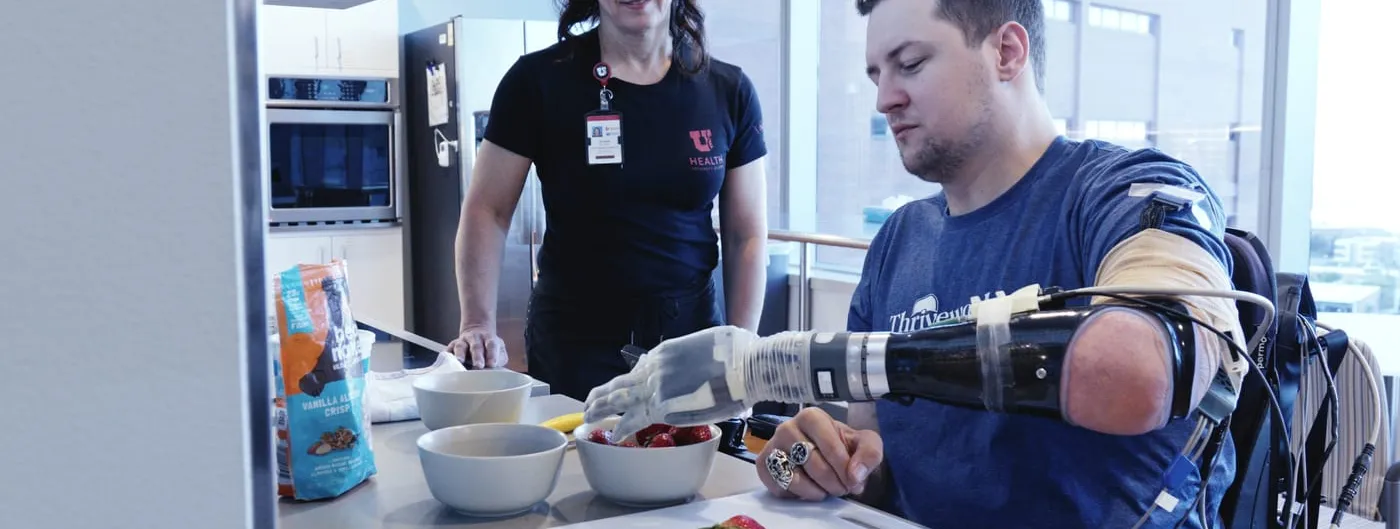
Alexander Davidson, 33, has taken the University of Utah neuroprosthetic arm home. Eight people had used the device before him; all eight used it inside the laboratory, under supervision. Davidson is the first to have it unsupervised in daily life, for a trial that runs a year at minimum and may be extended.
The hardware is a LUKE Arm, the commercial prosthesis built by DEKA, joined to the BIOS Controller, a direct interface to the peripheral nerves of the residual limb. That connection is what separates this from a body-powered or myoelectric prosthesis: it carries motor intent outward and sensation back, so the hand is both controlled by thought and felt. Davidson lost the arm below the elbow after a 35-foot fall from a telephone pole at 16, which also left him paralysed from the waist down.
Within days he reported writing, playing cards, making a sandwich, picking up strawberries without crushing them, and holding his wife’s hand — the last with enough pressure feedback to judge his own grip. The Utah NeuroRobotics Lab is led by Jacob George, who is also chief scientist at BIOS, the company commercialising the interface.