A pacemaker that runs on the heartbeat it is pacing
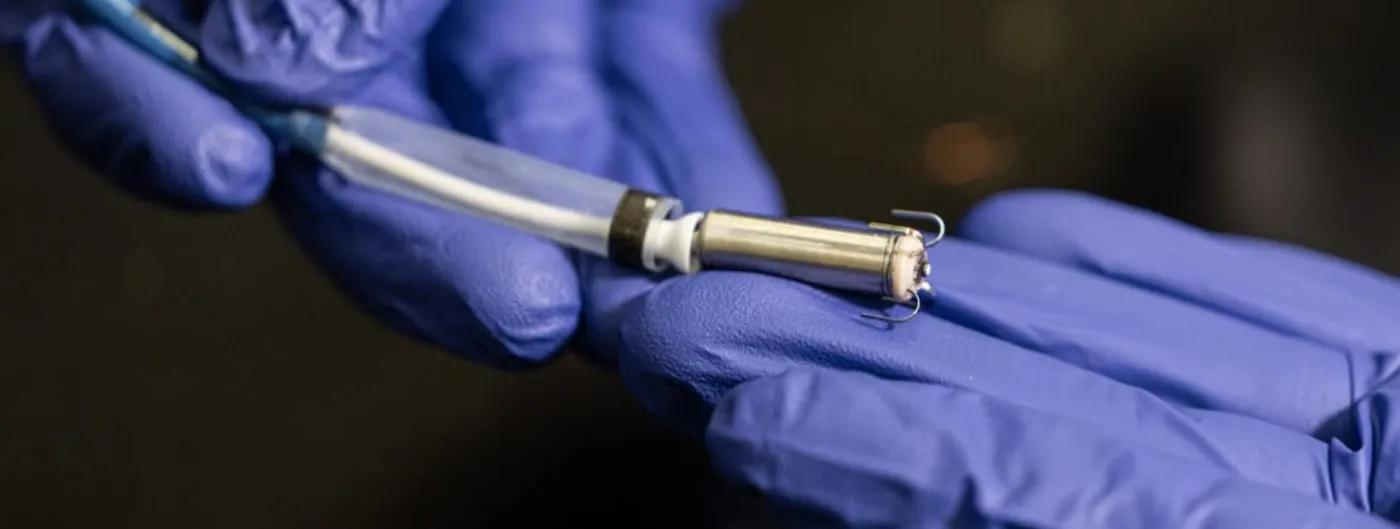
Joel Hallberg / University of Wisconsin-Madison College of EngineeringPress kit
Xudong Wang and Pengfei Chen at the University of Wisconsin-Madison built an oscillating triboelectric nanogenerator small enough to sit in the battery compartment of a Medtronic Micra leadless pacemaker, and published it in Science Advances on 19 August 2026 (doi 10.1126/sciadv.aef8903).
The mechanism is contact electrification. Two plates — one coated in copper, the other in fluorinated ethylene propylene — are pressed together by the motion of the beating heart and separated again, and the charge that builds up either paces directly or fills an onboard capacitor. In the lab the generator produced 276.6 microwatts per cubic centimetre, which the authors report as higher than previous miniaturised piezoelectric and triboelectric designs.
A prototype was implanted in a pig and watched for one month. It powered cardiac stimulation during functional testing, with no adverse reactions beyond those of a conventional battery-powered device. It also underperformed the bench: heart tissue damps the oscillator, and the heart’s twisting motion is not the clean vertical travel the design assumes.
The claim being tested is longevity, not power. A pacemaker battery is what forces a replacement operation every decade or so, and removing it is the only way to make the device outlast the patient. Human trials have not started.