Ecuador clears Wandercraft's self-balancing walking exoskeleton
Wandercraft / press kitPress kit
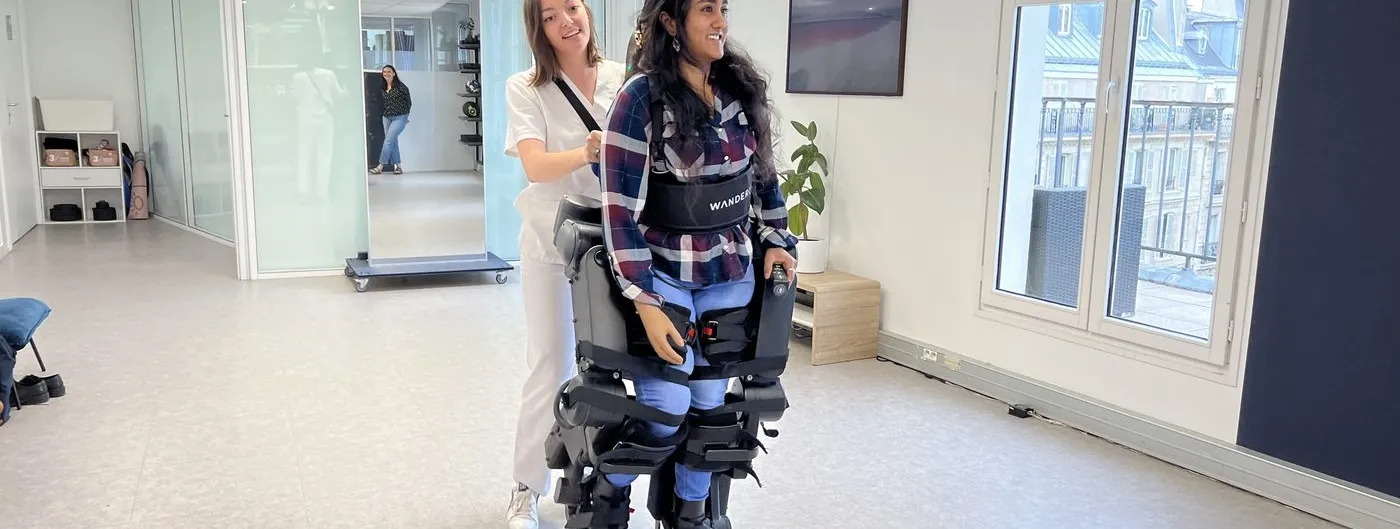
Ecuador’s health regulator ARCSA cleared Wandercraft’s Atalante X for clinical use on 27 July 2026. The clearance covers people with spinal cord injuries from C4 to L5, stroke-related hemiplegia and multiple sclerosis. Atalante X walks overground without crutches or a frame: the device balances itself, which is what distinguishes it from gait trainers that require the user’s arms and trunk to hold the body up.
That distinction is the whole content of the clearance. Dr David Cabrera of Holding Médico, quoted in the company’s announcement, put it in terms of who becomes eligible — the device “enables rehabilitation teams to engage a broader range of eligible patients in intensive overground walking, including those whose impaired balance, trunk control, or upper-extremity strength may limit their use of other systems.”
This is a single national market, and the Atalante X is already cleared and deployed elsewhere; Wandercraft says it is evaluating Costa Rica and Chile next. A capability that exists but is not approved where a patient lives is, for that patient, a capability that does not exist. Approvals are how the map fills in.