The FDA clears a self-balancing exoskeleton for use at home
WandercraftPress kit
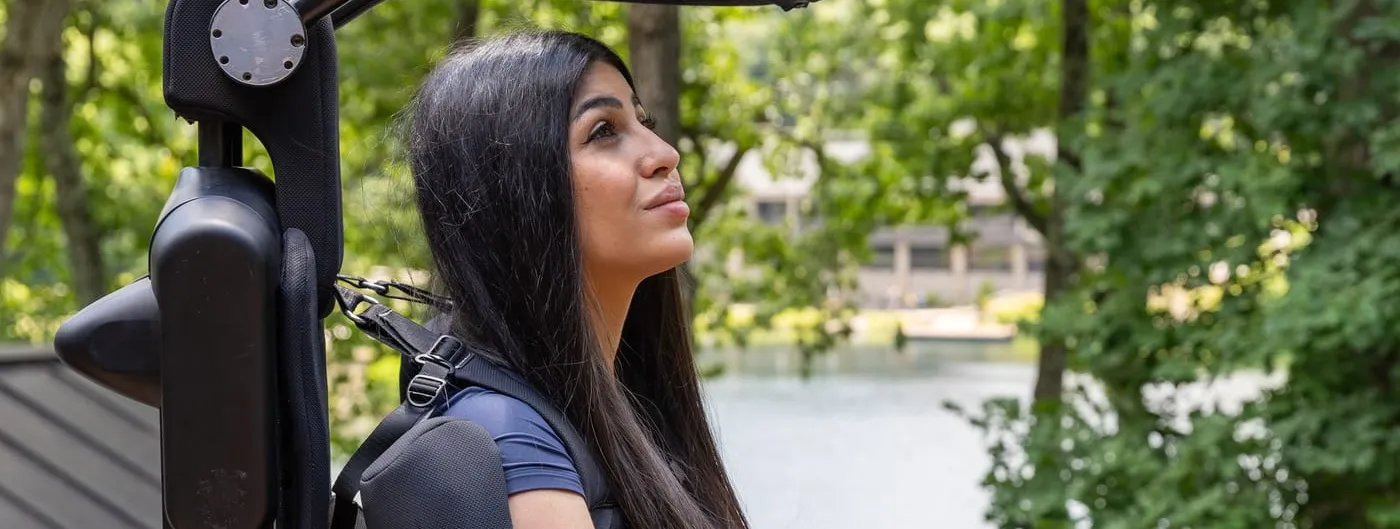
Wandercraft announced on 11 August 2026 that the US Food and Drug Administration has cleared Eve, a self-balancing exoskeleton, for personal use by eligible adults with spinal cord injuries at any level. The company’s earlier device, the Atalante X, is a rehabilitation exoskeleton used inside clinics; more than 150 clinical and research centres have one. Eve is the version meant to leave the clinic.
The clearance is bounded. It covers level indoor surfaces and adjacent open-air areas such as patios and terraces, requires a specially trained companion to be present, and positions the device as a complement to a wheelchair rather than a replacement for one. Wandercraft says the supporting clinical evaluation ran at three sites — the James J. Peters VA Medical Center, the Kessler Foundation and Walk in New York — and that participants reported gains in endurance, sitting balance, spasticity, sleep and bladder and bowel function.
The company gives 17 September 2026 as the US commercial launch date, and expects Medicare eligibility 60 to 90 days later under the DMEPOS billing code K1007 established in 2024.
The FDA’s public 510(k) database did not yet carry the record when this was written; its most recent Wandercraft entry is an Atalante X clearance dated 24 October 2025. This account rests on the company’s own announcement.