Humanoids fought a real fire in Beijing and three of twelve finished
Li Hao / Global TimesPress kit
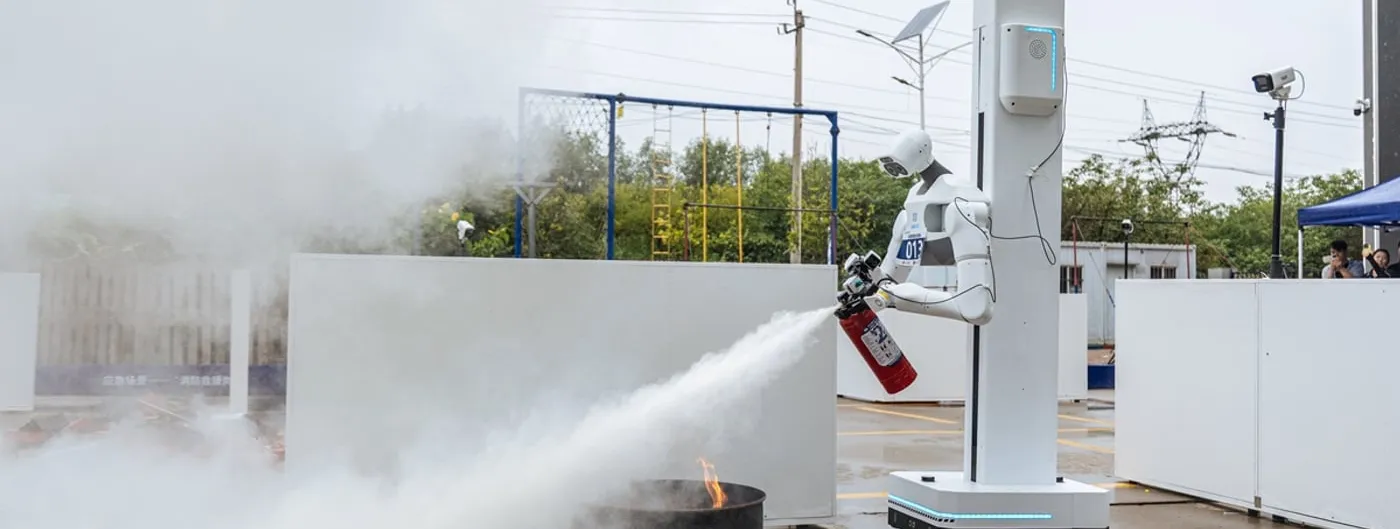
On 16 August 2026 the emergency-response final of the second World Humanoid Robot Games was held at a working fire brigade in Beijing rather than on an exhibition floor. Twenty-three teams entered the category. Each robot had thirty minutes to identify hazardous materials, shut off valves, and operate a fire extinguisher against a live fire.
Of the twelve teams that competed that day, three finished.
The failure rate is the result. Humanoid robots have spent two years being filmed dancing, tumbling and sprinting, nearly all of it on flat indoor floors under even light. The brigade yard supplied rain and shifting daylight, and visual recognition and manipulation degraded accordingly. Even among the finishers the margin was thin: one robot moved slowly enough that it needed two attempts to line its extinguisher up with the target.
None of this establishes that humanoids cannot do the work. It establishes that the distance between a demonstration reel and an unstructured task under a clock is still most of the distance — and that the distance is now being measured in public, at a real fire, instead of asserted in a specification.