A 320-contact retinal implant returns partial sight after 20 years
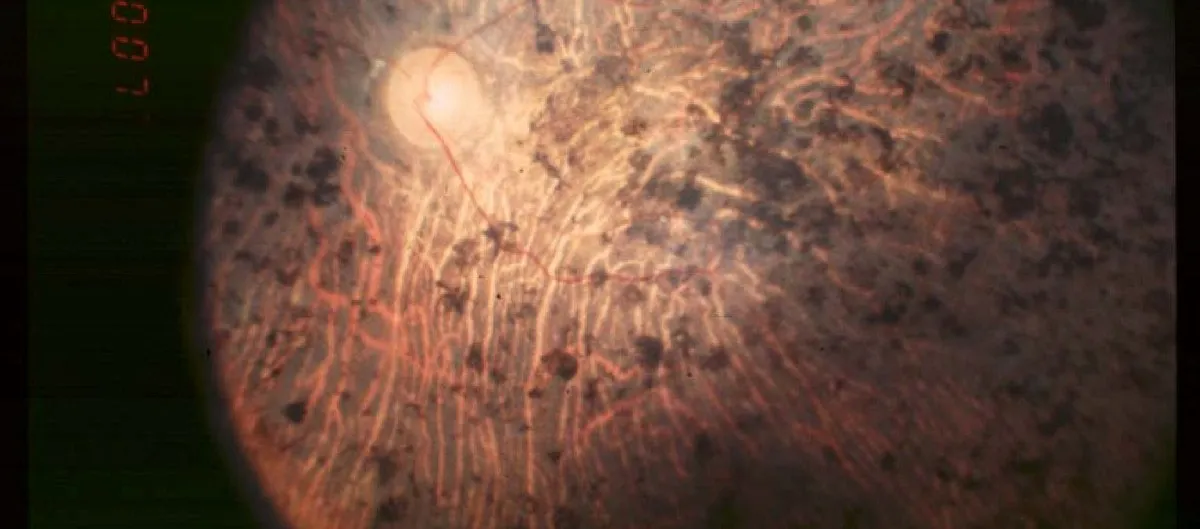

A team at Zhejiang Provincial People’s Hospital, led by Shen Lijun and Chen Yiqi, implanted a high-density electrode array carrying 320 three-dimensional contacts into the macular region of a 40-year-old woman who had been almost completely blind for 20 years from retinitis pigmentosa. The array went in through a minimally invasive vitreoretinal approach and is held by magnets seated in the choroid-scleral space rather than by titanium fasteners. The hospital announced the operation on 29 July 2026 and describes it as China’s first clinical-trial implant of a 320-resolution retinal-pathway visual brain-computer interface.
Two days after the device was switched on, the patient — identified by the pseudonym Lingling — could distinguish the letters L, C, H and R. She later wrote the characters 中国 legibly, picked up a computer mouse and a drink bottle, and walked a straight line indoors with right-angle turns unaided.
This is one participant, reported through the hospital and Chinese media. No peer-reviewed paper and no trial-registry entry were found in this run, so the durability of the result, the follow-up period and the failure modes are all unrecorded here.